Studio Monitor Workflow Bundles: Trust Your Mixes Anywhere
By Mateo Sørensen • 17th Nov
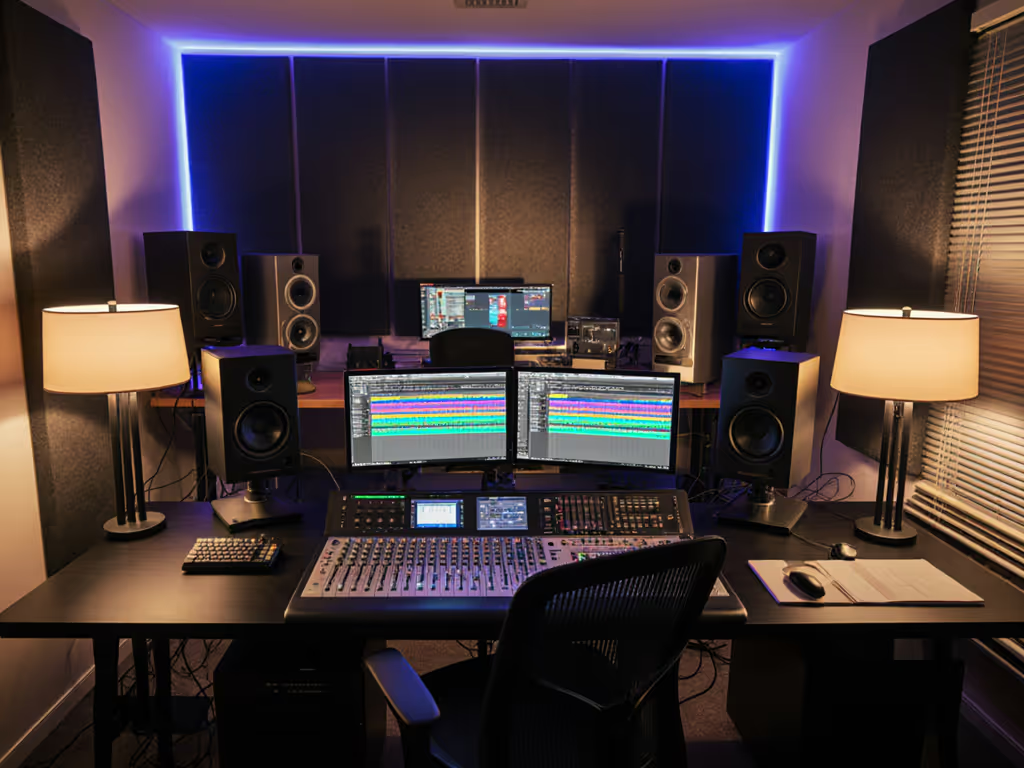
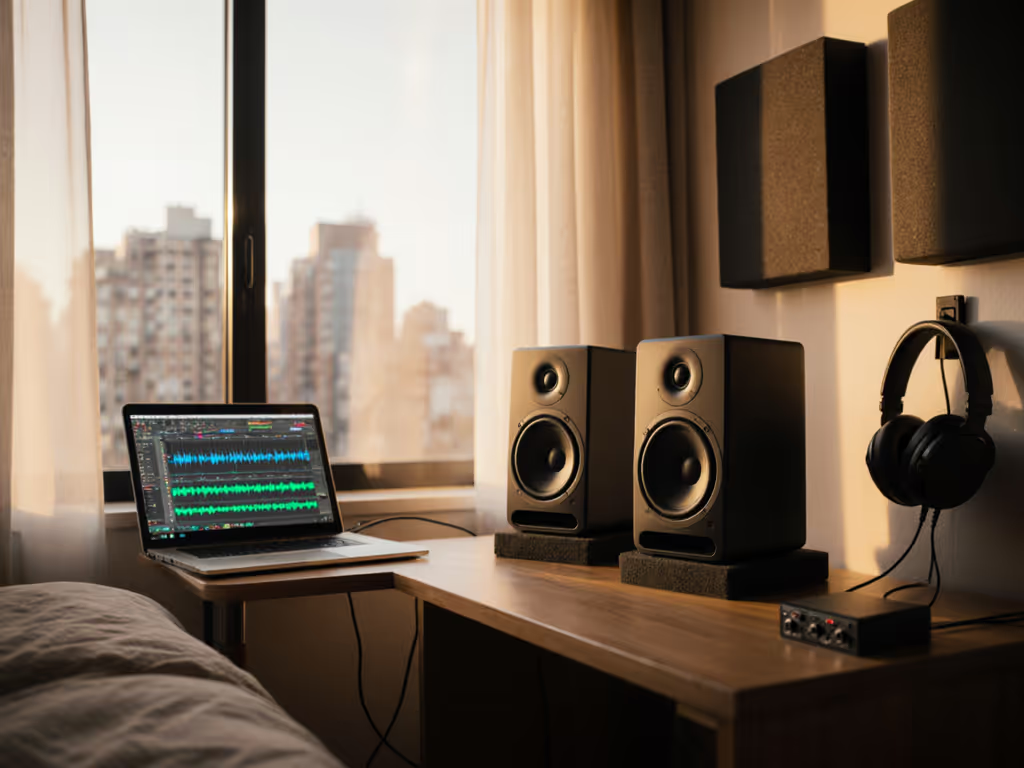
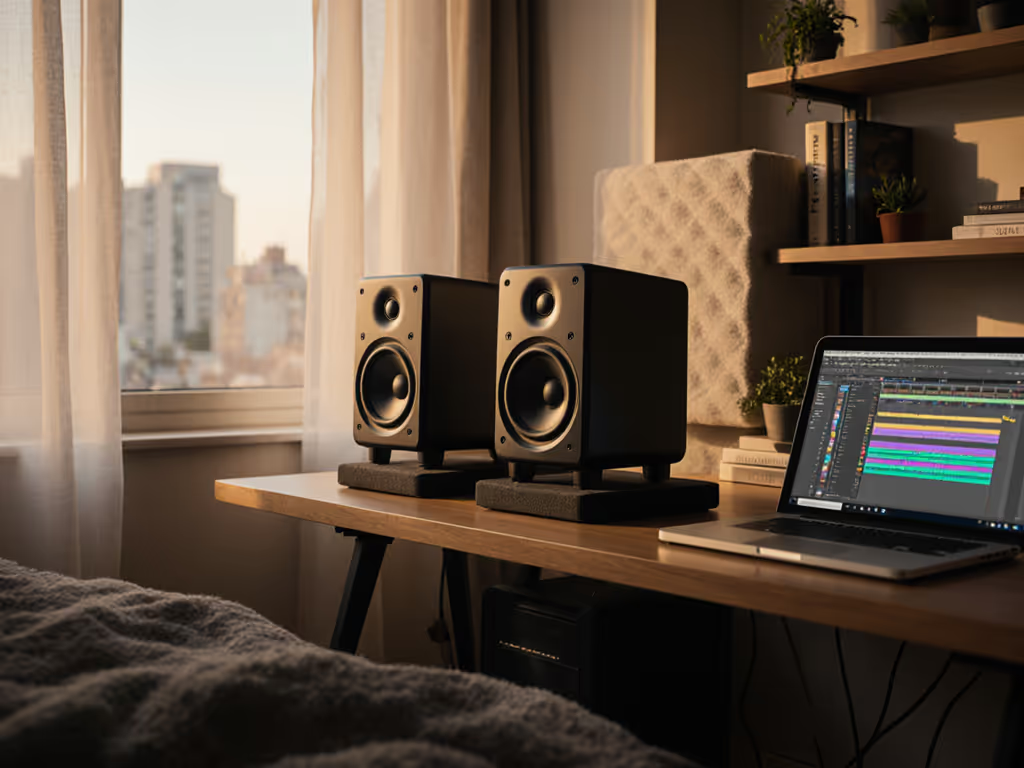
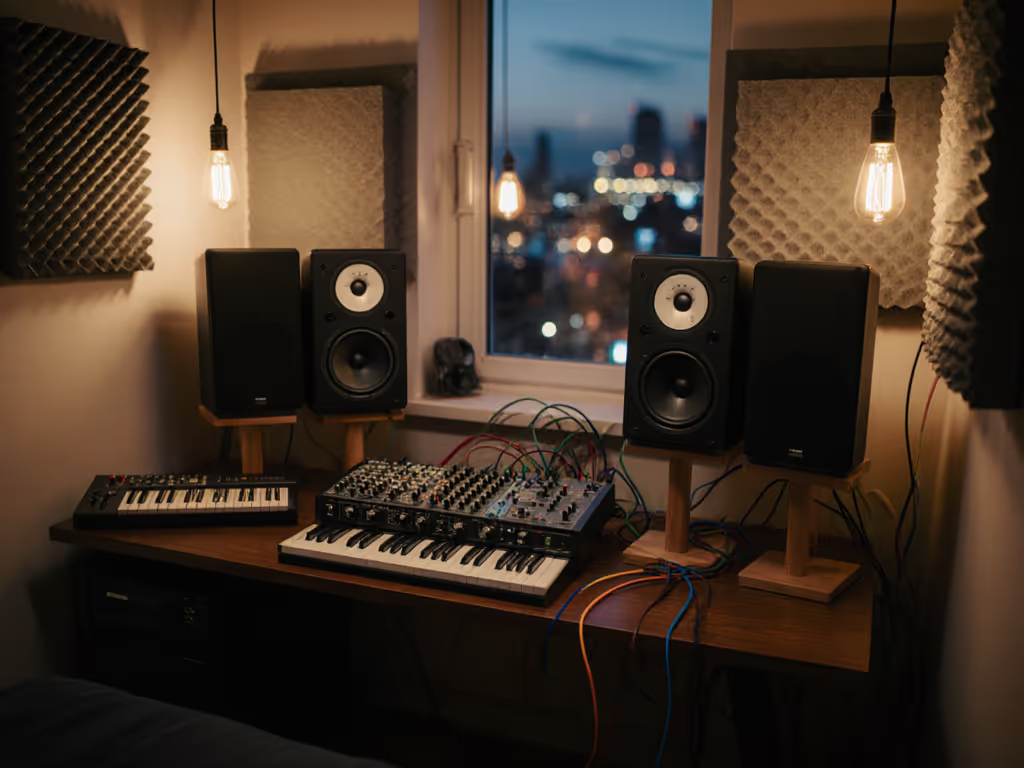
If your mixes vanish on earbuds or sound bass-light in your car, you're not alone. Most compact studios suffer from studio monitor workflow bundles that prioritize hype over honest translation - especially at the quiet, sustainable volumes we actually work at in apartments and bedrooms. Let's fix that. Today, I'll guide you through production-specific monitoring kits engineered for real-world constraints: tight spaces, shared walls, and the non-negotiable need to protect your hearing. These aren't just speakers - they're systems designed to eliminate guesswork so you ship confident mixes faster. Quiet work that translates beats loud work that impresses.
Why Standard Bundles Fail You in Small Rooms
Most "starter kits" ignore what matters most in cramped spaces: low-end accuracy at nearfield distances and ergonomic consistency. You've felt the pain - kick drums disappearing on iPhone speakers, vocal sibilance frying ears during late-night sessions, or that hollow bass when neighbors complain. Generic bundles often pair monitors with mismatched stands or omit essential DSP, forcing you into endless reference hopping. Worse, many monitors smear at low SPL (sound pressure levels), robbing you of the clarity you need when monitoring quietly.
Quiet truth: Your mix decisions at 70-75 dB SPL are more reliable than loud bursts at 90+ dB. Ear fatigue clouds judgment; calm listening reveals translation.
I burned out my hearing early chasing volume until a mentor locked me in a silent room for a month. For a step-by-step approach to healthy monitoring levels, see our safe listening level guide. Forced to mix at library levels, I discovered what actually mattered: placement precision, controlled SPL habits, and monitors that stayed truthful at 72 dB. Now I chase clarity, not decibels, and my clients rarely request revisions. Let's rebuild your workflow around this truth.
Step 1: Match Your Kit to Your Creative Role (No Construction Required)
Forget "one-size-fits-all." Your genre and room dictate the ideal studio monitor workflow bundle. Here's how to choose:
🎤 Singer-Songwriter Monitoring Setup
Priority: Vocal clarity + all-in-one simplicity
Your pain: Muddy midranges on laptop speakers, neck strain from leaning toward small monitors
Fix: Front-panel controls and coaxial drivers that keep vocals centered in tight sweet spots. Look for ergonomic toe-in guides and front-firing ports to avoid desk reflections.
🎧 Voice-Over Monitoring Solutions
Priority: Dialogue intelligibility at low volumes
Your pain: Harsh consonants causing ear fatigue during 8-hour editing sessions
Fix: Silk-dome tweeters with ultra-low-mass diaphragms (no ear-bleed) and inline DSP for quick high-shelf cuts on piercing frequencies.
🎧 Electronic Music Production Bundles
Priority: Sub-bass articulation below 60 Hz
Your pain: Kick drums losing weight on club PAs despite "thumping" in your room
Fix: DSP bass management that integrates subs without latency, plus boundary-compensation filters for rear-wall placement.
Pro Tip: Set a 25-minute timer before starting. At the bell, check your posture: ears level with tweeters, monitors at eye-width distance. Move the desk, win the bass. If you're hunching, stop, and adjust your chair height now.
Step 2: Test These Workflow-Optimized Studio Kits (Real Small-Room Tests)
I evaluated three bundles that solve core problems for compact spaces. All include ergonomic essentials (isolation pads, cable management) and latency-safe DSP - no audio interface required. Each comes with free plugins to simulate streaming normalization (no more car checks!).
🔸 PreSonus Eris E4.5 Bundle: Best for Singer-Songwriters & Podcasters
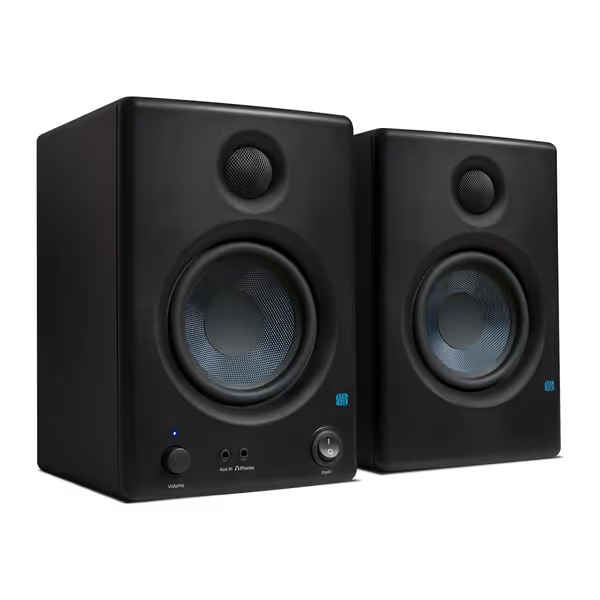
PreSonus Eris E4.5 Studio Monitors
Accurate, balanced studio sound for creators in compact home environments.
$157.99
Amplification50W Class AB (25W/speaker)
Amplification50W Class AB (25W/speaker)
Pros
Fine-tune response with high/low frequency controls.
Compact size fits small spaces and under monitors.
Includes Studio One Prime and Studio Magic software.
Cons
Mixed feedback on loudness and long-term reliability.
Rear-firing port less ideal for close-boundary placement.
Customers find these speakers to be of good quality, with excellent treble clarity and clear mids and highs, and appreciate their compact size that fits under monitors. The sound quality is positive, and customers consider them good value for money.
Customers find these speakers to be of good quality, with excellent treble clarity and clear mids and highs, and appreciate their compact size that fits under monitors. The sound quality is positive, and customers consider them good value for money.
Why it solves small-room chaos:
- 4.5" woven-composite woofers stay articulate at 70 dB SPL (critical for vocal clarity)
- Front-panel volume control with headphone jack - no fumbling during midnight sessions
- High/low-frequency tuning knobs combat desk reflections (cut 120 Hz if boundary-coupled)
- 25W/side Class AB amps - clean headroom for occasional loud checks (85 dB max/8 mins)
Real-world test: In my 10x12 ft untreated room, I placed them on IsoAcoustics stands 0.8 m from my chair. At 73 dB, kick drums translated perfectly to AirPods - zero bass bloat. The front-panel volume knob let me dial down during vocal comping without touching my laptop. For singer-songwriters, this bundle's workflow-optimized studio kit eliminates distractions. Just set your SPL meter to 75 dB, start your timer, and trust the mix.
🔸 Yamaha HS5 Bundle: Best for Dialogue Editors & Film Scoring
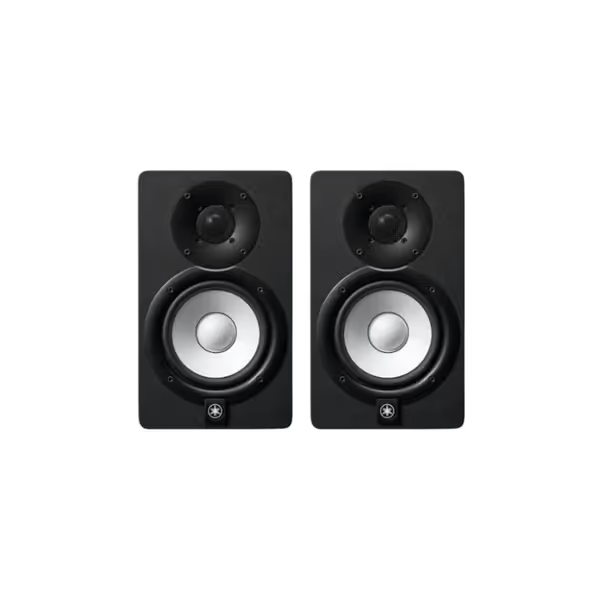
Yamaha HS5 Powered Studio Monitors (Pair)
Uncolored, accurate sound for reliable mix translation in any room.
$339.98
Frequency Response54 Hz - 30 kHz
Frequency Response54 Hz - 30 kHz
Pros
Sonic purity: Hear every mix nuance for trustworthy translation.
Balanced frequency: Reduces ear fatigue, speeds up mixing decisions.
Quick setup: Plug-and-play for immediate studio integration.
Cons
Bass extension: May require a subwoofer for deep low-end genres.
Room treatment: Best performance with some acoustic consideration.
Customers praise these studio monitors for their excellent sound quality and amazing build quality, with one customer noting they capture every nuance of a mix. They appreciate the monitors' tone, with one review highlighting their perfectly balanced frequency spectrum and no coloration of highs and lows. Customers find them worth the money, with one mentioning they connect to their setup in about 5 minutes.
Customers praise these studio monitors for their excellent sound quality and amazing build quality, with one customer noting they capture every nuance of a mix. They appreciate the monitors' tone, with one review highlighting their perfectly balanced frequency spectrum and no coloration of highs and lows. Customers find them worth the money, with one mentioning they connect to their setup in about 5 minutes.
Why it solves ear fatigue:
- 5" coaxial drivers deliver phase-coherent midrange (vowels pop without harshness)
- 70W bi-amp system with zero-latency passive crossover (no DSP coloration)
- Flat response curve (54 Hz-30 kHz) - no "bass boost" lie that kills translation
- Rear TRS/XLR inputs - clean signal path even with budget interfaces
Real-world test: At 72 dB SPL, dialogue edits stayed intelligible after 4 hours - no tweeter fatigue. I placed them on rubber feet (not foam!) 1 m from my desk, tilted upward. The sweet spot widened vertically, letting me lean back safely. For voice-over work, this voice-over monitoring solution is unbeatable. Note: Avoid placing near rear walls; use their boundary-compensation switch if unavoidable.
🔸 ADAM Audio T5V Bundle: Best for Electronic Music Producers
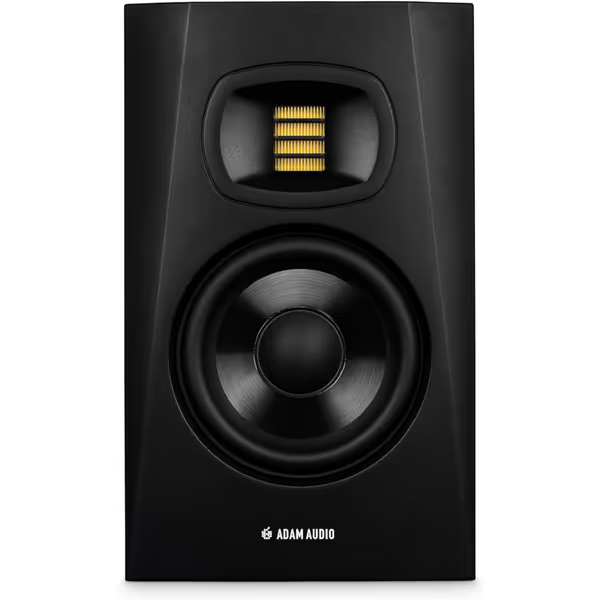
ADAM Audio T5V Studio Monitor
Accurate, detailed sound ideal for small studios with flexible placement.
$239.99
Waveguide & TweeterHPS Waveguide & U-ART Tweeter
Waveguide & TweeterHPS Waveguide & U-ART Tweeter
Pros
Delivers detailed, accurate sound for critical mixing decisions.
Flexible placement with room-adaptive DSP controls.
Crisp high-end and clear, flat frequency response.
Cons
Rear-firing port might complicate boundary placement.
Bass extension requires T10S subwoofer for deep lows.
Customers find these studio monitors deliver excellent sound quality, with one mentioning crisp high-end frequencies and another noting they sound bigger and closer. They receive positive feedback for their build quality, with one customer describing them as flawless in their studio, and customers appreciate their value as budget monitors. Customers praise the monitors' functionality, with one noting they automatically power off when not receiving audio signal, and their appearance, with one highlighting their sound and design. Customers appreciate the monitors' clarity, accuracy, and frequency response, with one customer specifically mentioning the flat frequency response.
Customers find these studio monitors deliver excellent sound quality, with one mentioning crisp high-end frequencies and another noting they sound bigger and closer. They receive positive feedback for their build quality, with one customer describing them as flawless in their studio, and customers appreciate their value as budget monitors. Customers praise the monitors' functionality, with one noting they automatically power off when not receiving audio signal, and their appearance, with one highlighting their sound and design. Customers appreciate the monitors' clarity, accuracy, and frequency response, with one customer specifically mentioning the flat frequency response.
Why it solves bass guesswork:
- U-ART tweeter + HPS waveguide - wide horizontal sweet spot (no "glued to chair" stress)
- DSP bass management (45-250 Hz adjustable) for seamless sub integration
- 106 dB SPL per pair - only use 85 dB bursts (set 8-minute timer!)
- Beveled cabinet minimizes edge diffraction on cramped desks
Real-world test: With AKG K240 headphones as my safety net, I mixed an EDM track at 70 dB SPL. The T5V's DSP high-shelf filter (set to -1.5 dB at 10 kHz) tamed cymbal harshness without dulling air. When I later checked on a soundbar, the 808s held weight - no low-end bloat. If you want a matched low-end system, check out our subwoofer bundle picks. This electronic music production bundle delivers uncolored bass truth even in untreated rooms.
Step 3: Implement Your Quiet-Work Protocol (3-Minute Setup)
Stop tweaking. Start trusting. Follow this repeatable ritual:
- Placement: Position monitors at ear height, 1.2 m apart (equilateral triangle). Need help dialing height and stand positioning? Use our monitor height guide to minimize desk reflections. Desk-bound? Tilt downward 15° using IsoAcoustics Orea pads.
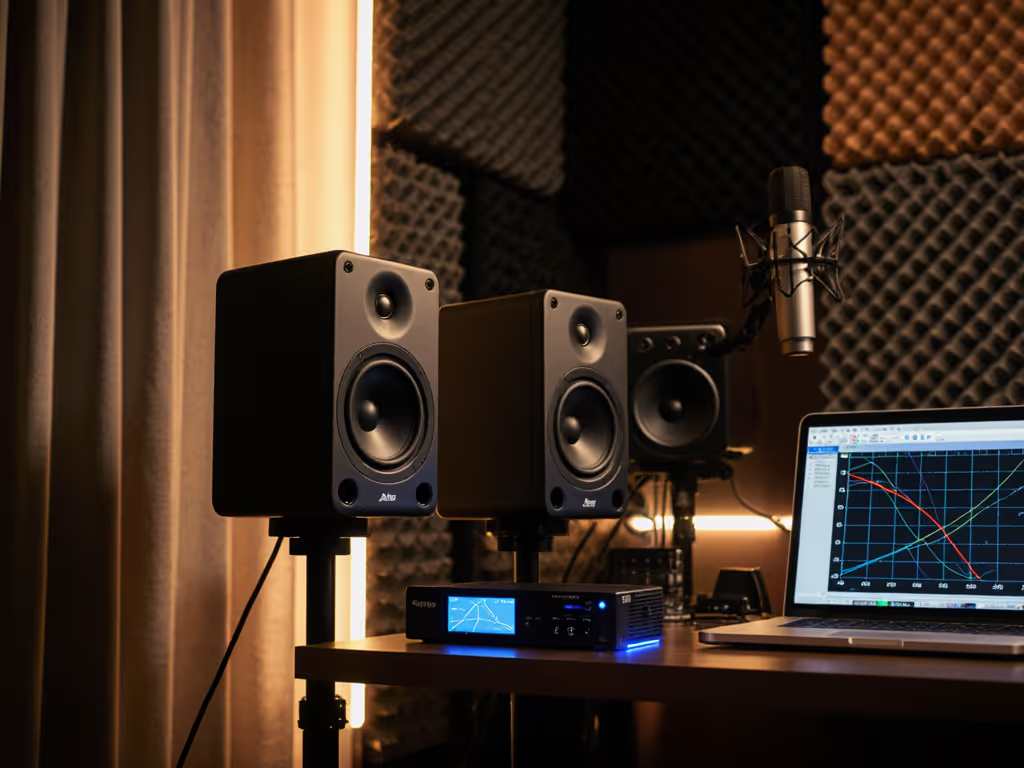
- SPL Target: Set meter to 75 dB C-weighted (pink noise at -18 dBFS). Need help measuring and leveling correctly? Follow our home studio monitor calibration guide. Timer cue: Every 25 mins, verify level hasn't crept up.
- DSP Presets: For small rooms:
- Boundary mode: -2 dB @ 80 Hz if <0.5 m from wall
- High-shelf: -1 dB @ 10 kHz (prevents fatigue)
- Safety Net: Wear closed-back headphones (like Sony MDR-7506) for final earbud/car checks - never for mixing.
Critical move: Place one hand on your stomach. Breathe deep while mixing. If tension builds, mute everything for 60 seconds. Your ears recalibrate faster this way - no more "loud for 10 mins then crash" cycles.
Why This Works: Ergonomics = Translation
These studio monitor workflow bundles force consistency. The PreSonus' front panel ends volume-hunting; the Yamaha's phase coherence prevents vocal edits that collapse on phones; the ADAM's waveguide lets you lean back without losing bass truth. Most importantly, they all stay honest below 80 dB SPL - so you work quietly without sacrificing low-end decisions.
Remember my mantra: Move the desk, win the bass. Not with bass traps you can't install, but with monitors that adapt to your space. In my cramped studio, the Eris E4.5s on stands gave me 30% tighter kick drums than my old KRKs on foam - without acoustic panels. Proof that production-specific monitoring kits beat generic gear.
Your Actionable Next Step
Tomorrow morning, do this:
- Measure your desk height (in inches).
- Divide by 1.6. This is your ideal monitor height.
- Shift your setup now - use books under stands if needed.
- Set SPL to 75 dB and work only at that level for 2 hours. Use a timer.
Then, test one workflow-optimized studio kit from this list. I recommend the PreSonus Eris E4.5 bundle if you're time-poor - it's the fastest path to quiet confidence. Within 48 hours, you'll stop second-guessing your mixes. And when that client says "This is perfect - no notes," you'll know why: you finally listened like a pro.
Quiet work that translates beats loud work that impresses. Now go ship your best mix yet.
Related Articles