Cinema Sound Mixing Monitors: Mixes That Translate Every Time
By Jae Min Park • 7th Feb
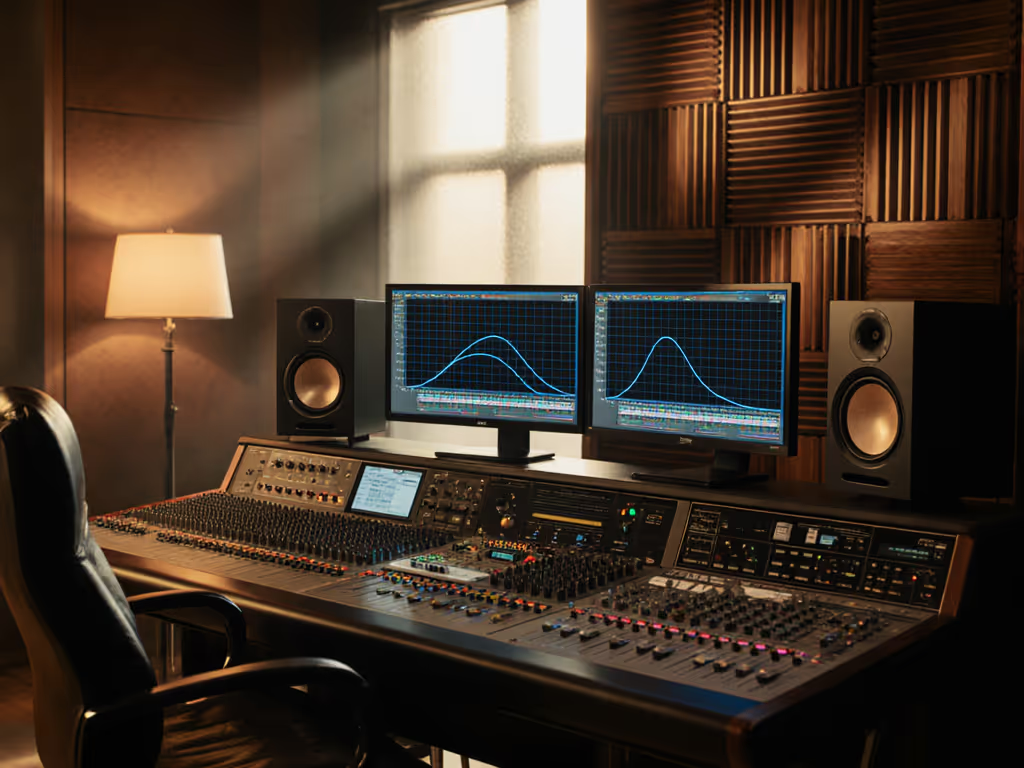
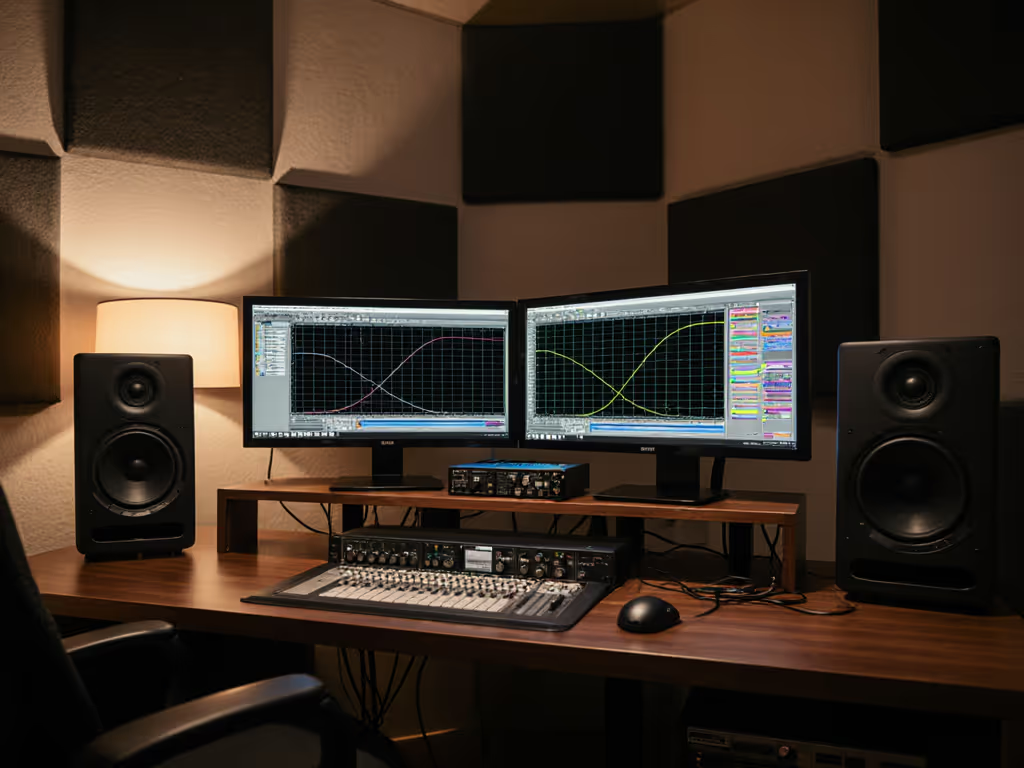
Let's cut through the noise: your cinema sound mixing monitors aren't about replicating a $500k dubbing stage. They are about making decisions that actually hold up on your friend's phone, in a streaming app, or, crucially, on a neighbor's earbuds. And if you're working in a bedroom or spare room? Theatrical audio monitoring means navigating bass traps with tennis balls instead of $500 isolation pads. I've seen students spend weeks tweaking EQ, only to fix everything by pulling their Yamaha HS5s off the desk. That's the real win: reliable translation with minimal fuss. Forget chasing specs. Let's build a routine that works where you are.
Why Your Room Breaks Cinema Translation (And How to Fix It)
Cinema sound lives in extremes, whispers next to explosions, dialog buried under 808s. But small rooms sabotage this dynamic range. Let's connect the physics to your daily frustration:
The Bass Nightmare: When 60 Hz Disappears
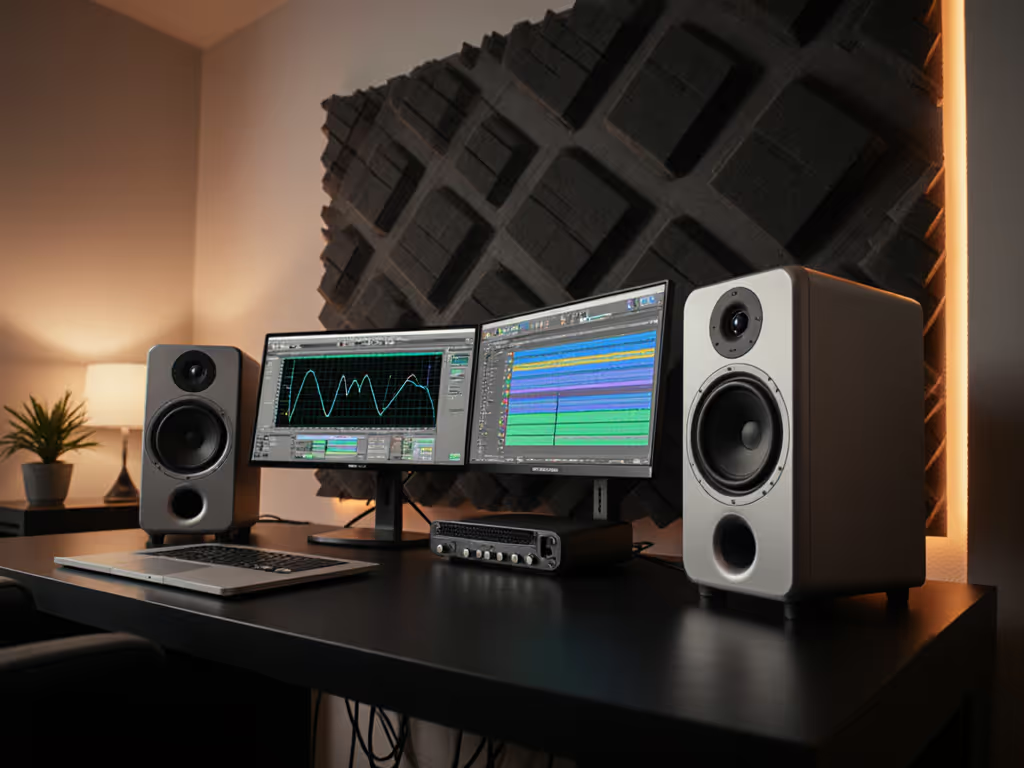
In untreated rooms under 200 sq ft, boundary effects create modal peaks (where bass swells) and nulls (where it vanishes). At 80 Hz (critical for male dialog and kick drums), your room might cancel frequencies your monitor reproduces perfectly. For practical fixes, see our placement & room treatment essentials guide. Result? You boost lows "to make it sound full," then wonder why car systems blast mud.
Key insight: Small-room modes lie more about bass than any monitor spec sheet ever will. Fix the room first, then trust your speakers.
Why Placement Matters More Than Tweeter Specs
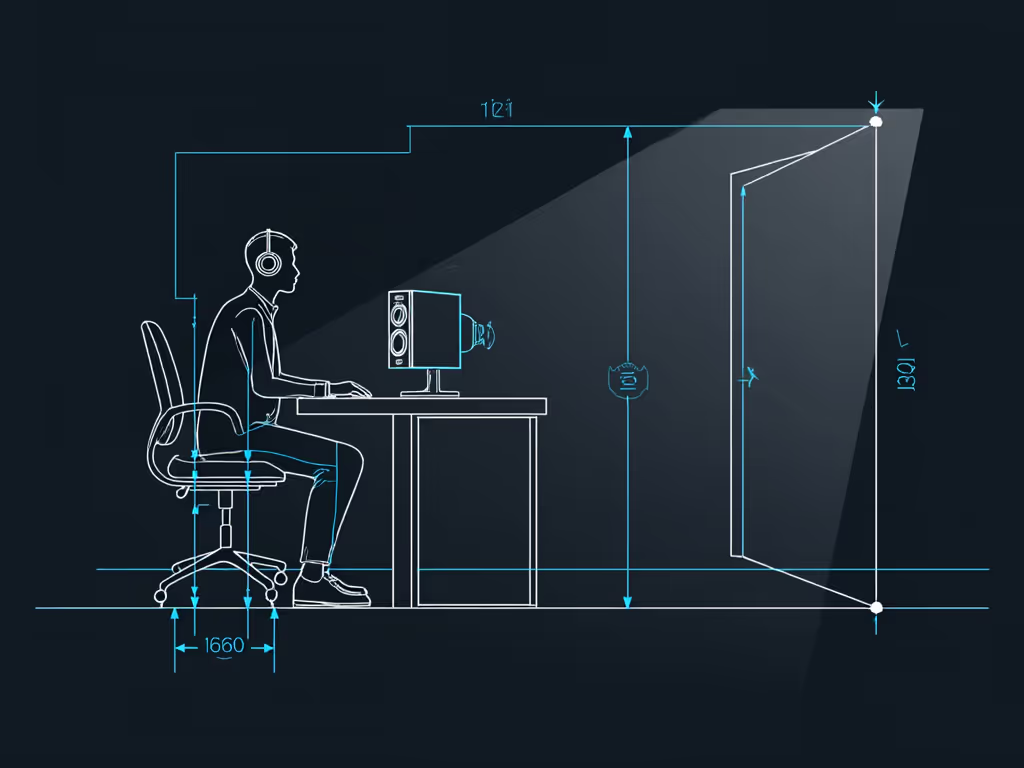
Most beginners place speakers on desks, creating early reflections that smear midrange clarity. Use our desk reflection and ideal height guide to position monitors for clear dialog. That "muffled dialog" you hear? Often desk vibrations, not a bad tweeter. In film workflows, where dialog sits just 3 dB above score, even 5 ms of reflected energy blurs intelligibility.
I watched students in my community workshop solve this with two tennis balls under each speaker (a $3 fix). Suddenly, their mixes traveled. That's when I realized: specs alone won't save you. Place, isolate, then decide.
Quiet Monitoring = Lost Translation
Cinema mixes need dynamic range, but your roommate needs sleep. Many monitors collapse below 75 dB, bass turns woolly and highs dull. Set safe reference levels and protect your hearing with our safe monitoring levels guide. Yet low-volume accuracy is non-negotiable for spotting subtle Foley or ADR pops. You need monitors that stay honest at 70 dB, not just "110 dB peak SPL."
The Honest Monitor Checklist
Before buying anything, tackle these room issues. They're 80% of your translation problem:
✅ Boundary Rule: 1.5x Driver Diameter Away from Walls
- For 5"-6.5" woofers (most cinema monitors), keep speakers at least 8 inches from walls.
- Why? Reduces bass buildup below 100 Hz. Yes, even in tiny rooms. Angle corners outward if needed.
✅ Desk Decoupling: Stop the Vibration Flood
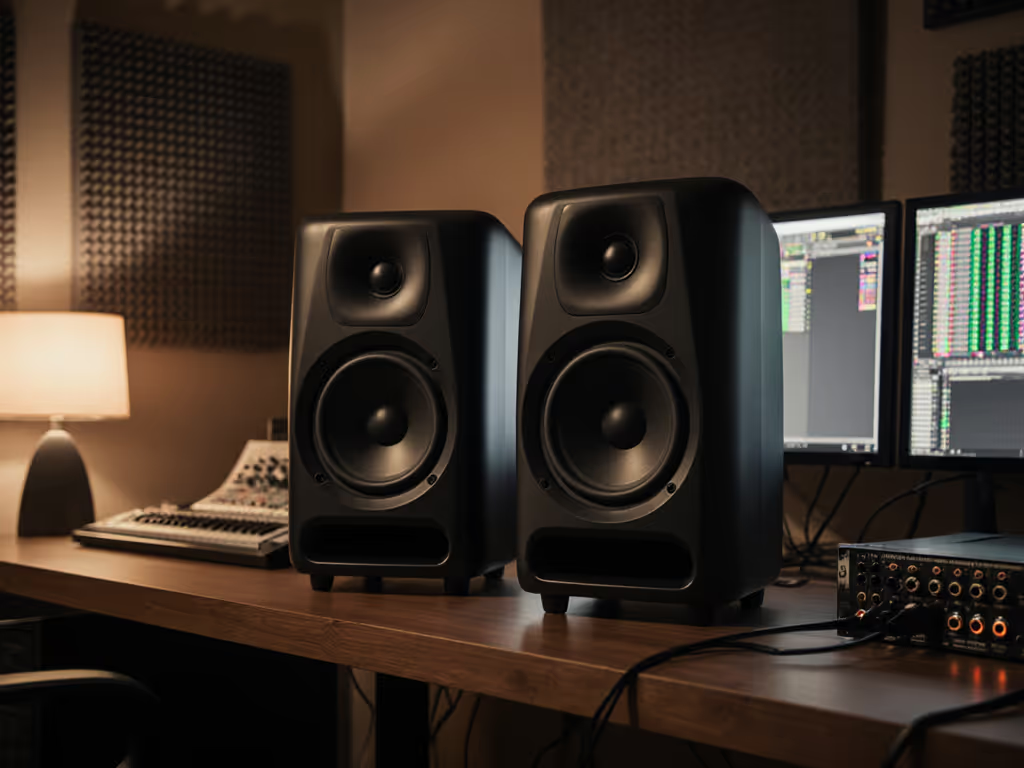
- Never place speakers directly on desks. Vibration travels through wood, muddying mids.
- Real fix: Use dense foam pads (like Auralex MoPADs) or stack two tennis balls under each speaker. Yes, tennis balls. They absorb energy without killing transients.
✅ Height Matters: Ear Level = Dialog Truth
- Position tweeters at ear height when seated.
- Why? Off-axis response ruins high-frequency translation (critical for sibilance/hiss). If your desk is too low, tilt speakers down slightly, but never use stands that wobble.
Choosing Cinema Sound Mixing Monitors for Small Rooms
Forget "dubbing stage" aspirations. For bedroom studios, prioritize repeatability over raw power. Here's what actually impacts translation:
The Low-End Truth Test
Cinema lives in 40-120 Hz. But sub-100 Hz energy in small rooms comes mostly from room gain, not your speakers. Look for monitors with:
- Adjustable bass shelving (e.g., -3 dB at 80 Hz) to counter wall coupling.
- Flat phase response near port tuning (avoids "boom/crash" artifacts at low SPL).
Example: Yamaha HS5s include a Low Frequency Control (-5 dB to 0 dB below 100 Hz). Dial in -2 dB when near walls, it's like magic for dialog clarity. The Focal Shape 65's bass shelf (+/- 6 dB from 250 Hz) handles corner placement cleanly. No room for trial? Skip sealed-box designs, they'll feel weak in small rooms.
Unfatiguing Clarity > "Sparkly" Highs
Harsh tweeters force you to turn down volume, killing translation confidence. For film work:
- Choose silk or soft-dome tweeters over aluminum (less fatigue during 4-hour sessions).
- Verify off-axis response: if highs collapse sharply when you move your head, imaging will narrow.
The IK Multimedia iLoud MTM shines here. Its waveguide design keeps highs consistent even if you're editing ADR on your couch. No more "sweet spot panic" when checking mixes from your chair's edge.
The Quiet-Volume Litmus Test
Can you hear a pin drop at 70 dB? Before buying:
- Play a dialog reel at 70 dB SPL (use a phone app like Decibel X).
- If consonants (t, k, p) blur, skip it.
The Neumann KH 120 passes this, its neutral midrange stays articulate even when neighbors are sleeping. Many "bass-heavy" monitors fail here, making you overcompensate with high-shelf EQ.
Forget "Immersive Audio" Hype: Start Mono-Compatible
Most cinema workflows start in stereo. Avoid monitors that hype stereo width artificially, your mix will collapse on center-channel TVs. Look for:
- Tight phase coherence (check manufacturer dispersion graphs).
- Minimal comb filtering when placed near monitors.
Ironically, the M-Audio Forty Sixty, often dismissed as "budget", delivers shockingly stable imaging in tight spaces. Its DSP-controlled crossover minimizes midrange smear.
Your Small-Room Cinema Workflow: 4 Steps to Trust
Step 1: The 10-Minute Room Tune
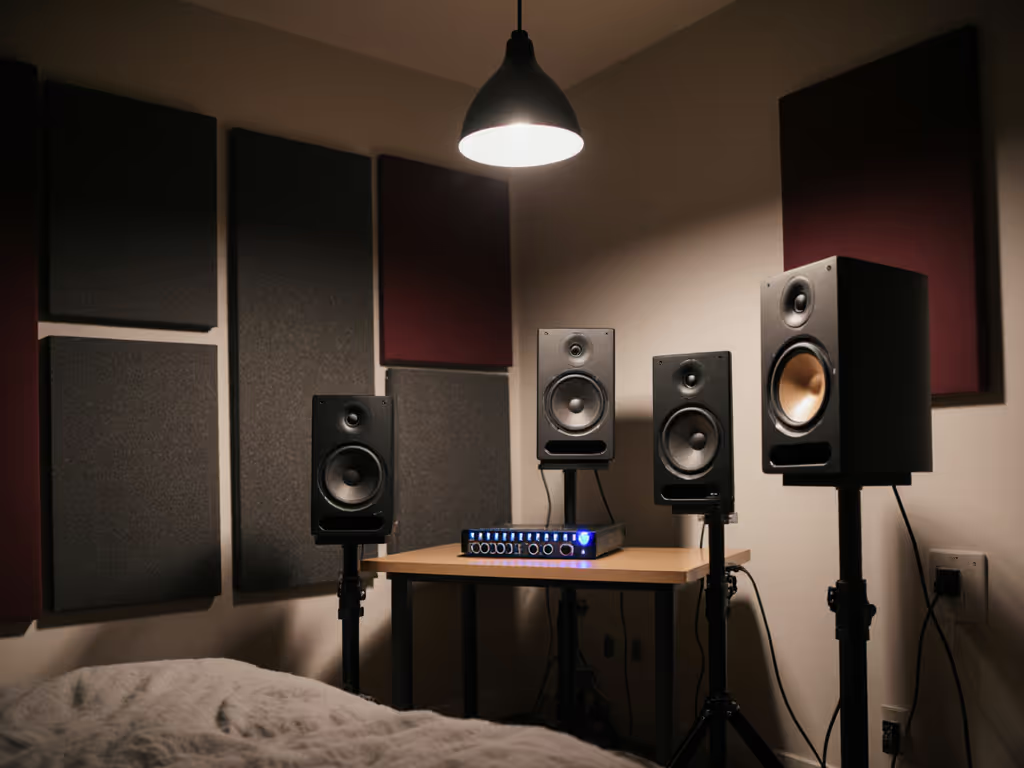
- Move speakers 8+ inches from walls (use tape measure).
- Decouple with tennis balls or foam pads.
- Angle inward so tweeters point just behind your ears (not directly at them).
- Set bass shelf to -2 dB if near walls (default for most compact rooms). To go further, calibrate your room with Sonarworks step-by-step for consistent translation.
Step 2: The Quiet-Reference Check
- Mix dialog/music at 73 dB SPL (measured at mix position).
- Every 30 minutes, drop volume to 65 dB and spot-check key moments. If dialog gets buried, you boosted lows too much (not the room).
Step 3: The Earbud Reality Test (Done Right)
Don't just blast your mix on AirPods. Instead:
- Play a reference film on earbuds (note how dialog sits in the mix).
- Match your project's dialog level to that reference.
This calibrates your ears, not the speakers. Suddenly, earbud checks become useful data, not panic triggers.
Step 4: Bass Management Without a Sub
No room for a sub? Compensate smartly:
- Roll off lows below 80 Hz on non-bass sources (dialog, Foley).
- Use a high-pass filter at 30 Hz on all tracks (clean up rumble without losing punch).
This mimics how streaming services handle low-end. Your HS5s (or similar) will now translate cleanly to soundbars.
Final Mix: Confidence Over Gear Chasing
Real cinema translation starts not with a monitor's frequency chart, but with your routine. I've seen mixes survive everything, roaring theaters, tinny TVs, even iPhone speakers, when creators nailed placement and isolation first. That day in my workshop, two tennis balls under a $300 pair of speakers did more for my students than any spec sheet ever could.
Your goal isn't a perfect room. It's a stable workflow where kick drums don't vanish on YouTube, and dialog cuts through club noise. Stop chasing "theatrical dynamic range monitoring" specs. Start with what's in your room today. Adjust the bass shelf, decouple the desk, and trust your ears at safe volumes.
Place, isolate, then decide. Do that, and you'll spend less time second-guessing, and more time shipping projects that actually sound great everywhere. Ready to dive deeper? Explore how room correction DSP (like Sonarworks) can fine-tune this foundation, without becoming an acoustics engineer.
Related Articles