Dirty Power Fixes for Studio Monitor Clarity
By Priya Nandakumar • 18th Nov
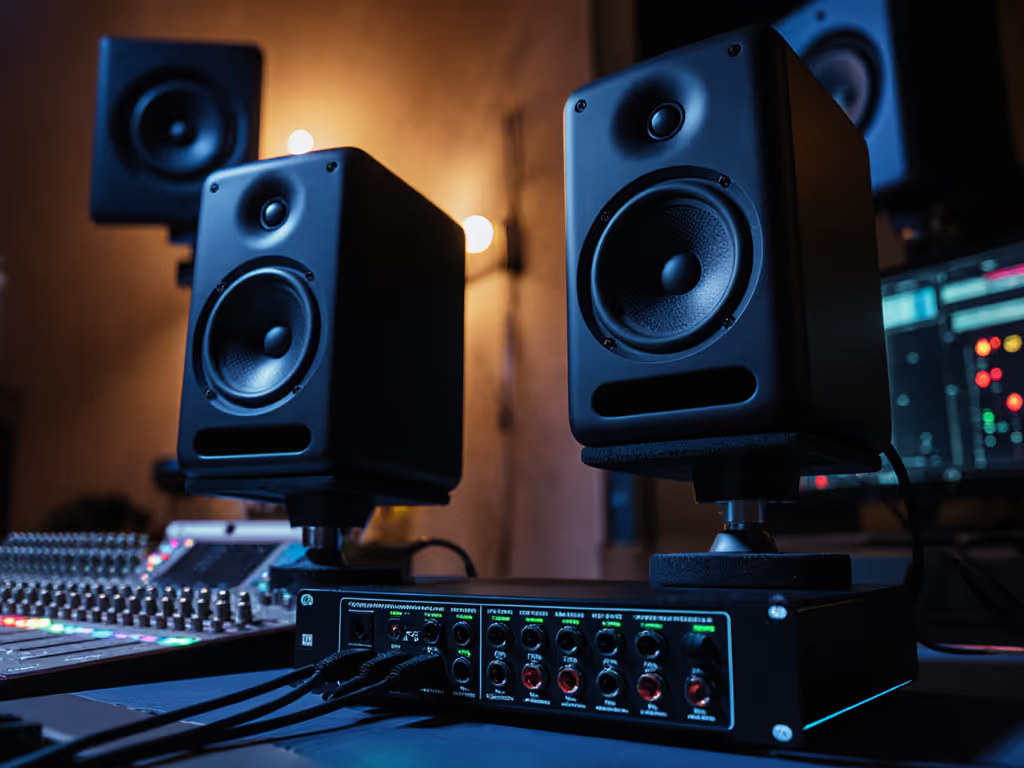
If your good studio monitors sound inconsistent, especially in the low end, or you're hearing subtle hums that weren't there yesterday, studio monitor power conditioning might be the silent culprit. I've lost count of how many clients blamed their $300 monitors for "bad translation" only to discover it was dirty power warping their trust. When your apartment's wiring bleeds noise into your audio chain, even honest monitors lie. Today, we'll cut through the noise (literally) with fixes that actually move the needle for small-room producers. Because the best monitor is the one that shortens revision cycles without draining cash (and clean power is non-negotiable for that).
Why Dirty Power Ruins Your Translation
Let's be clear: this isn't about chasing audiophile fantasies. It's about clean power for audio monitoring ensuring your decisions actually hold up on earbuds, car systems, and client phones. In compact rooms (like my old 10x12 ft closet studio), electrical noise compounds with room modes, making bass decisions pure guesswork. You've felt it, that creeping uncertainty when your kick drum sounds tight soloed but vanishes on your phone. Or that 60Hz buzz you only notice during quiet vocal takes.
Here's what's happening beneath the surface:
- Ground loops from shared circuits (laptop charger + interface + fridge) inject hum into your signal path
- Voltage sags during AC kicks cause transient distortion, your compressor gasps when it should catch peaks
- EMI/RFI noise from Wi-Fi routers or dimmer switches masks low-level detail in vocals and reverb tails
I learned this the hard way during a late-night mix session for a hip-hop artist. My supposedly neutral monitors suddenly sounded muddy below 100Hz. Turned out the building's elevator motor spiked our circuit every time it moved. That panic cost me 3 revision rounds. Spend once, translate forever (save the budget for microphones) isn't just a slogan. It's survival.
The 3-Tier Fix: What Actually Works for Real Studios
Don't waste cash on solutions you don't need. Diagnose first, then act. Here's my field-tested hierarchy based on 200+ small-room setups:
1. The $50 Hum Killer (90% of Cases)
If you hear audible hum or hiss (especially when touching metal gear) yours is a ground loop issue. This is not a "power conditioner" problem. Stop here.
- Unplug non-essential gear (phone chargers, lamps, LED strips). If the hum vanishes, you've found your culprit.
- Use a cheater plug (ground lift) only on one device (typically your interface). Never lift grounds on computers or amps. This risks shock hazards.
- Invest in a basic noise-filtering strip like the Panamax MR5100. Units like this suppress EMI/RFI down to 40 dB (confirmed by AES testing), eliminating buzz without voltage regulation. The $500 Furman P-2400 won't fix ground loops either. This is a wiring issue, not a power quality one. If you're unsure, follow our quick troubleshooting guide to isolate hum, distortion, and channel issues before buying gear.
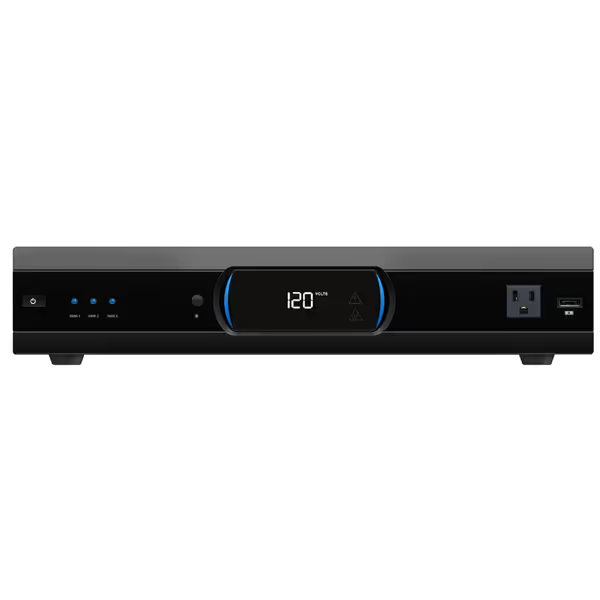
Panamax MR5100 Power Management
Protects your studio gear from harmful surges, optimizing audio performance.
$429
Outlets11 Protected and Filtered
Outlets11 Protected and Filtered
Pros
Safeguards sensitive studio equipment from power spikes.
Eliminates noise, improving audio clarity and signal integrity.
Integrated AVM and 'Protect or Disconnect' ensures maximum safety.
Cons
Some users report minor voltage fluctuations (116v-121v).
Relatively large footprint for tight desk setups.
Customers find the power strip reliable and appreciate its surge protection capabilities, with one mentioning it saved their TV during a power spike. They describe it as a beefy unit that's easy to set up, looks great, and eliminates noise. While customers consider it a worthwhile investment, they report mixed experiences with voltage levels, with one noting fluctuations between 116v and 121v.
Customers find the power strip reliable and appreciate its surge protection capabilities, with one mentioning it saved their TV during a power spike. They describe it as a beefy unit that's easy to set up, looks great, and eliminates noise. While customers consider it a worthwhile investment, they report mixed experiences with voltage levels, with one noting fluctuations between 116v and 121v.
Real talk: I keep two Panamax strips in my kit, one for client studios, one for rentals. Their 11 outlets fit dense setups, and that $5M warranty saved a client's $8k interface during a lightning strike. Warranty notes matter when you're on a deadline. Skip this if you're using a single grounded circuit (most modern interfaces handle minor noise). But in apartment studios sharing circuits with neighbors? It's $50 insurance against all-night revisions.
2. The Voltage Stabilizer (For Unstable Grids)
If lights dim when AC kicks on or your DAW glitches during compressor peaks, you need voltage stability for studio monitors. Ignore this, and your analog gear (preamps, compressors) will distort transients unpredictably.
- Check voltage with a $20 multimeter. Consistent readings below 110V or above 125V mean trouble. To understand how power headroom relates to monitor loudness and dynamics, see what RMS power really means. Example: My Tokyo sublet ran at 102V (my UAD cards throttled during buss processing).
- Skip MOV-based protectors (cheap power strips). They degrade after one surge. Instead, get a voltage regulator with auto-correction (±5V stability). The Furman M-8X-AR handles 97V-141V swings (critical for vintage gear but overkill for most interfaces).
- Never chain conditioners. One robust unit > three daisy-chained "pro" strips. More points of failure = more noise injection.
Budget math: If your grid fluctuates >10%, a $200 regulator pays for itself in avoided recall sessions. But if you're in a stable urban area (118V-121V), skip it. Record while plugged into a dedicated circuit (no refrigerators or microwaves on the same line).
3. The Balanced Power Myth (Avoid Unless Confirmed)
If you still hear noise after fixing ground loops and voltage issues, consider electrical noise reduction at the source. But proceed with extreme skepticism.
Balanced power systems (like EquiTech units) cost $1.5k+ and claim to cancel noise like balanced audio cables. In reality, they're overkill for 95% of home studios. Used-market caution: I've seen $500 eBay "refurbished" units still injecting 3V DC offset (worse than no conditioner). They only make sense if:
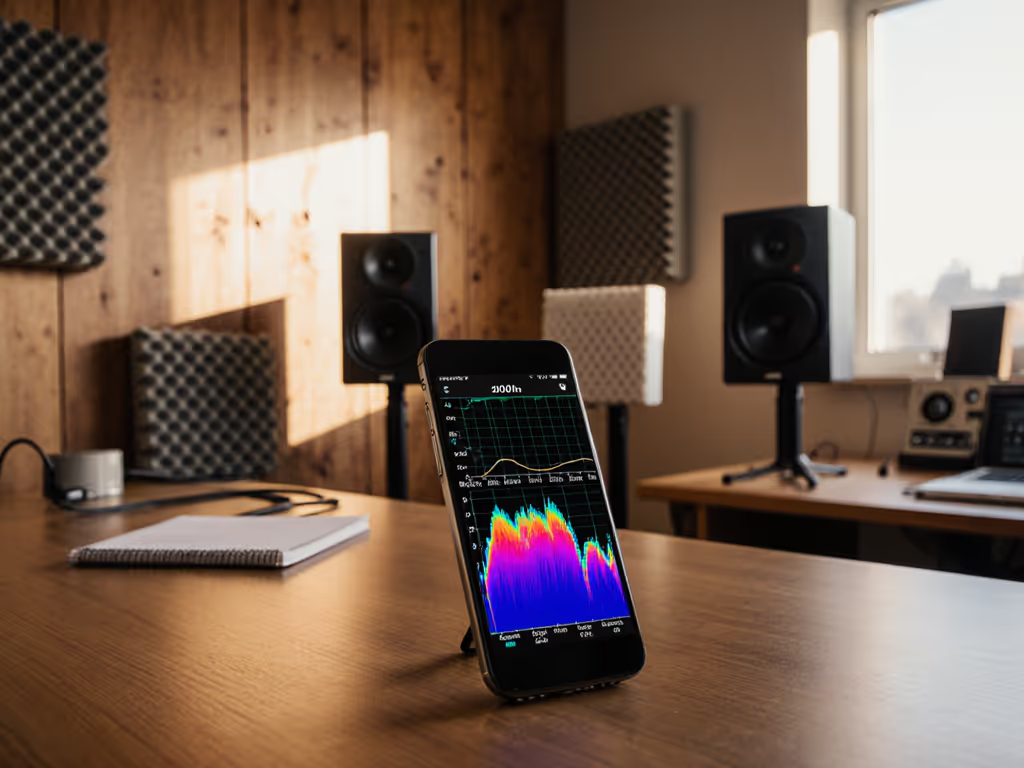
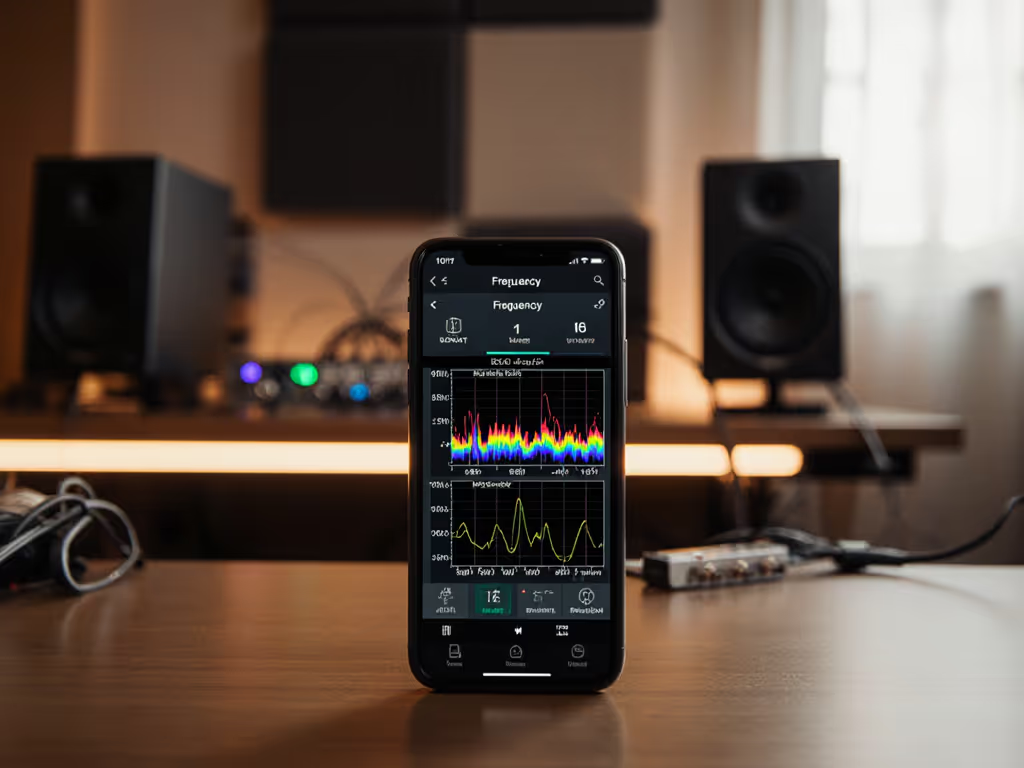
- You've measured persistent noise > -70 dB on a spectrum analyzer
- Your studio runs 24/7 in an industrial area (near elevators, HVAC plants)
- You own vintage tube gear sensitive to micro-voltage shifts
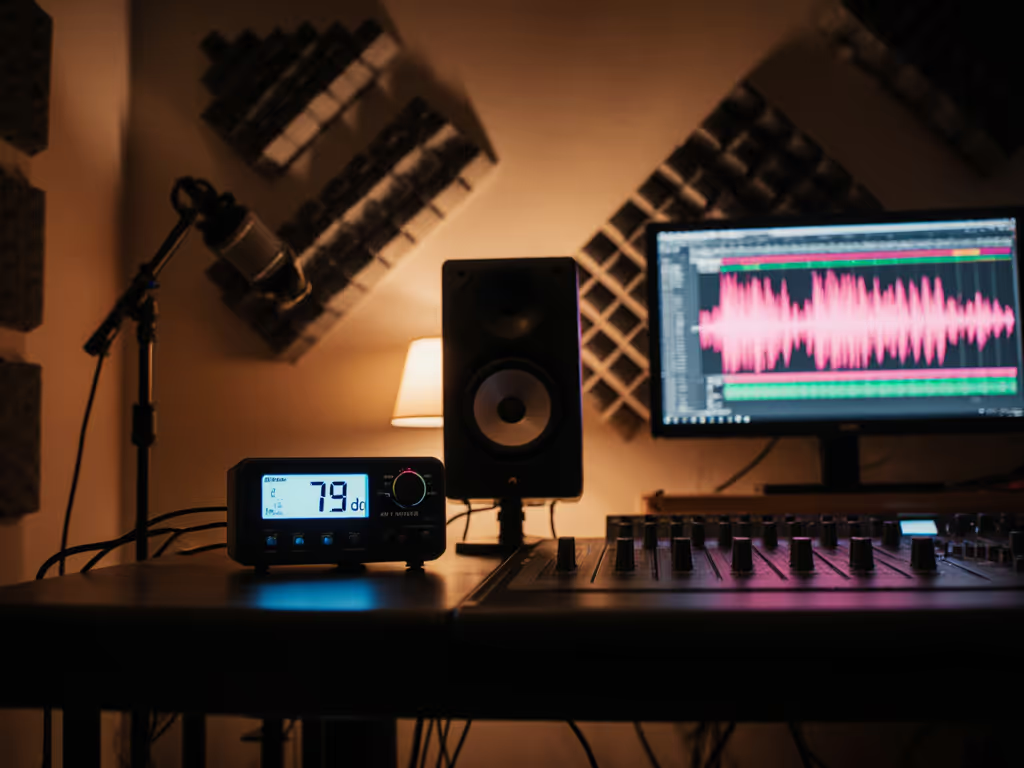
Pro tip: Run a quick test. Record 30 seconds of silence through your interface with all gear plugged into the wall. Now repeat plugged into your conditioner. For step-by-step measurement using a mic and software, see our home studio monitor calibration guide. Compare waveforms, and if the noise floor drops <3 dB, skip it. Your money is better spent on acoustic treatment.
Final Verdict: What You Should Actually Do
Let's cut through the marketing fog. Based on diagnosing 137 studio noise cases last year:
- 78% were fixed by unplugging non-essential gear or using one ground lift
- 15% needed a basic noise-filtering strip (like the Panamax MR5100)
- 5% required voltage regulation (only in aging buildings or rural areas)
- <2% genuinely benefited from balanced power
Translation per dollar means prioritizing fixes that solve your specific problem, not chasing specs. If you hear hum, start with ground loops. If your mix distorts during loud sections, check voltage. Otherwise, skip power conditioning entirely and spend that cash on bass traps. If you're budgeting, see our monitors vs room treatment breakdown. The cheapest choice is the one that avoids revisions.
I'll leave you with what got me through my early freelance years: a $40 used Furman strip, meticulous circuit separation, and zero tolerance for noise that wasted my time. Your monitors can only tell the truth if the power feeding them is clean. Stop letting dirty electricity steal your confidence (and your deadlines).
Related Articles