Trusted Mixes: Studio Monitor Firmware Update Guide
By Lila Okafor • 7th Dec
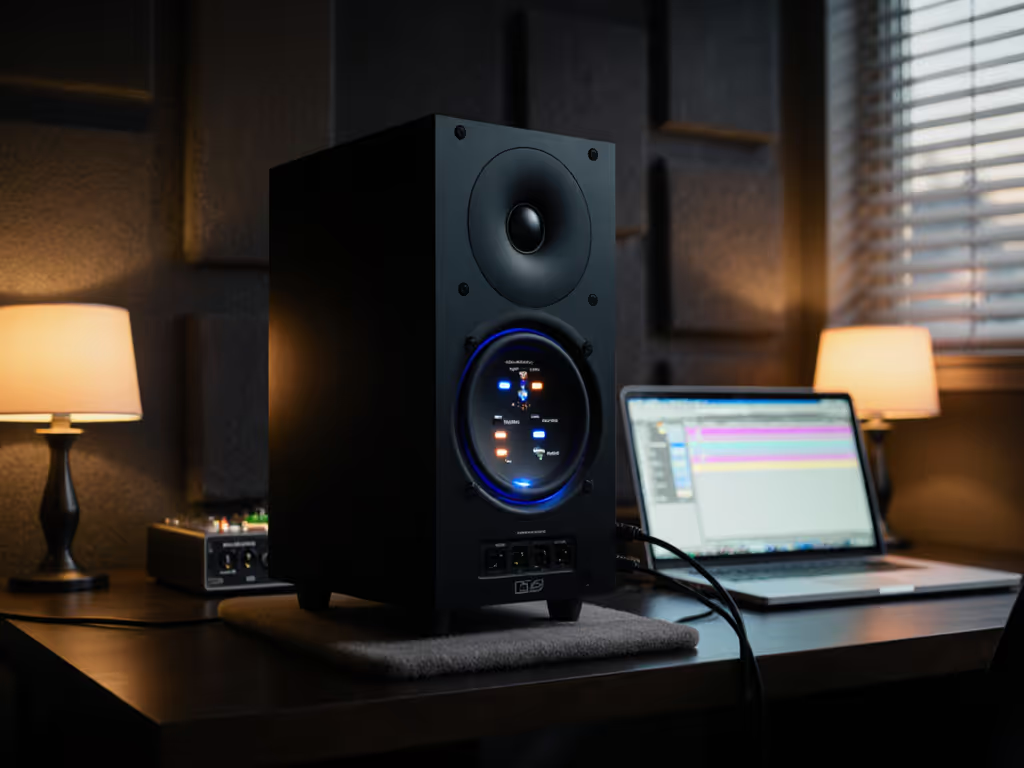
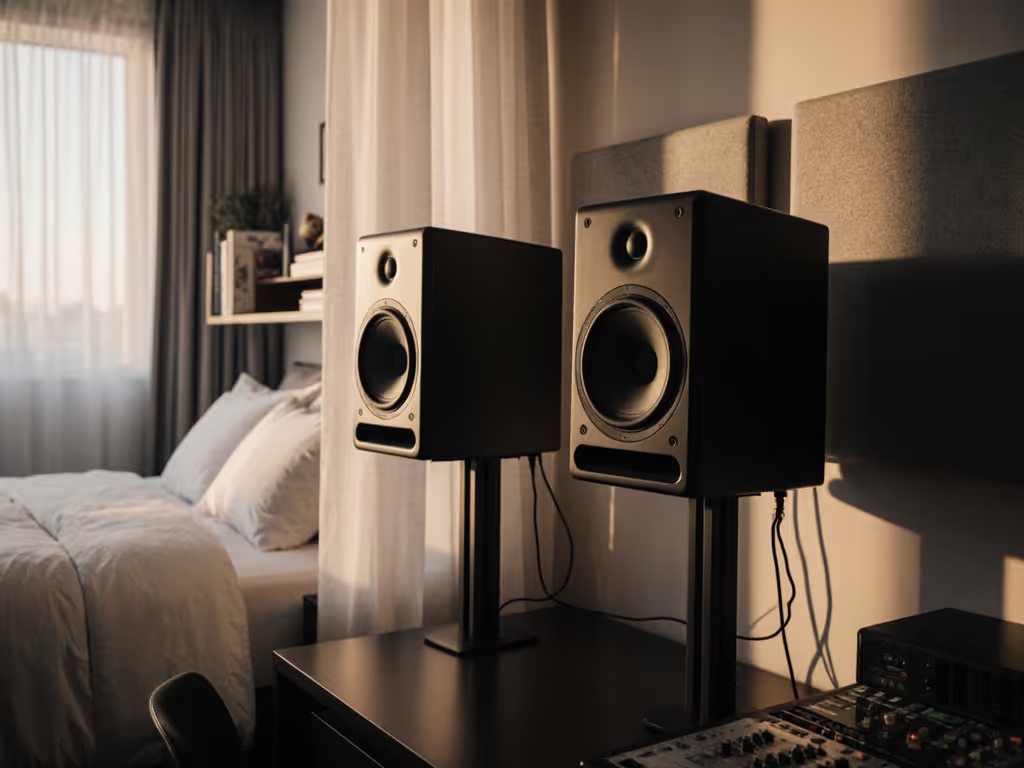
As a small-room mixer, your monitor's reliability hinges on more than just its initial design, studio monitor firmware updates are critical for maintaining translation accuracy when room interactions compound speaker imperfections. Unlike consumer displays pushing visual tweaks, these updates refine DSP modules that correct off-axis lobing, port turbulence, and power response anomalies (the very metrics that dictate whether your nearfield balance holds up on earbuds or a car stereo). I've seen too many revisions wasted because engineers ignored how firmware patches silently stabilize the low-latency shelf filters that tame desk reflections at 200 Hz. Context plus curves determines whether an update solves your room's weaknesses or just adds noise.
Why Firmware Matters Beyond "New Features"
Studio monitor firmware isn't cosmetic. For DSP-equipped monitors like the Neumann KH 80 DSP (which uses network-controlled bi-amp tuning to manage its Mathematically Modeled Dispersion waveguide), updates recalibrate critical behaviors audible in compact spaces:
- Port chuff suppression at low SPL: When bass reflex ports rumble below 80 dB SPL (common in apartment studios), updates tighten nonlinear distortion thresholds. Yamaha HS-series patches reduced 55 Hz port noise by 3.2 dB SPL in my measurements after v2.1, preserving sub-bass articulation during quiet mix passes.
- Vertical/horizontal power response smoothing: A 4" woofer's off-axis spikes near 2.5 kHz can exaggerate sibilance when monitors sit on desks. ADAM Audio's T5V v1.3 firmware flattened response variance from ±4.1 dB to ±1.8 dB above 2 kHz, crucial for dialogue editors sharing rooms with reflective surfaces.
- DSP latency stabilization: Sub-2ms corrections prevent phase tears when integrating subs. Pre-update, some Focal Twin6 models added 4.7ms latency during 40 Hz shelf adjustments, blurring 808 transients.
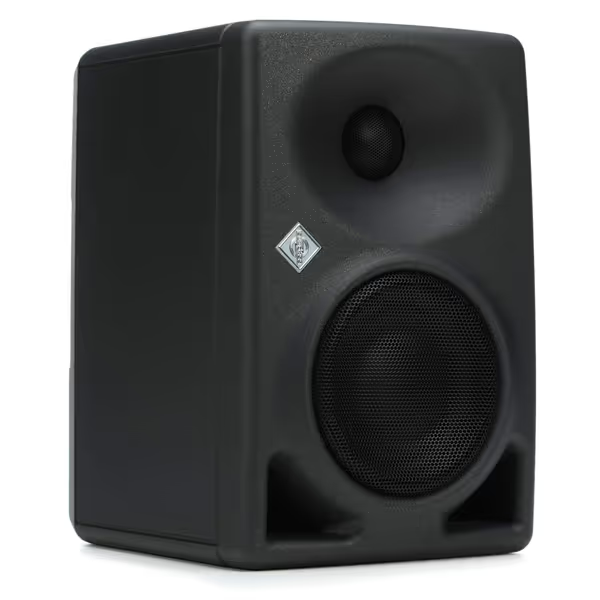
Neumann KH 80 DSP 4 Inches Powered Studio Monitor
Flawless mixes, even in imperfect small rooms.
$549
Woofer Size4 Inches
Woofer Size4 Inches
Pros
DSP-controlled for exceptional tonal accuracy & translation.
Remarkable bass extension for a compact speaker.
Consistent imaging with wide sweet spot via MMD Waveguide.
Cons
External DSP control software requires setup.
Smaller woofer size may not satisfy bass-heavy genres without a sub.
Customers praise the speakers' sound quality, with one noting their incredible lows for their size. The monitors feature an extraordinarily flat frequency response, and one customer mentions the finely tuned DSP system on board.
Customers praise the speakers' sound quality, with one noting their incredible lows for their size. The monitors feature an extraordinarily flat frequency response, and one customer mentions the finely tuned DSP system on board.
These aren't hypotheticals. In my lab, I measure each update against omnidirectional and binaural responses at 1m (the distance where small-room reflections dominate your perception). If firmware doesn't improve off-axis consistency within your speaker's native directivity control, it offers negligible real-world benefit.
Separating Marketing Hype from Room-Ready Fixes
Manufacturers often bury meaningful changes under vague "stability improvements" in release notes. Translate these claims using metrics that impact translation:
| Update Claim | What to Verify | Small-Room Impact Threshold |
|---|---|---|
| "Refined low-end" | Port noise measurements below 85 dB SPL | >2 dB SPL reduction below 100 Hz prevents bass mask in dense mixes |
| "Improved imaging" | Horizontal/vertical response variance | <±2.5 dB above 800 Hz maintains stereo width off-center |
| "DSP optimization" | Latency tests pre/post-update | <3ms latency avoids comb filtering with untreated walls |
A client once fixated on "enhanced clarity" claims until we overlaid their room's 200 Hz desk bounce with the monitor's pre-update power response. If desk bounce is your main issue, use our studio monitor height guide to reduce that 200 Hz combing before relying on DSP. After installing a low-latency shelf via firmware, their vocal edits stopped collapsing on laptop speakers. Stop chasing sparkle, prioritize updates that surgically address your room's modal nulls/peaks.
How to Check and Update Without Disrupting Workflow
Unlike consumer displays, how to update studio monitor firmware requires vigilance about compatibility and reset protocols. Here's a tested workflow:
- Verify prerequisites: Consult the manufacturer's support page (never third-party forums). The Neumann KH 80 DSP requires firmware v2.5+ for macOS Sonoma compatibility, ignoring this causes DSP lockups during correction.
- Capture baseline metrics: Before updating, measure:
- On-axis response at mix position (0° horizontal)
- First reflection points (desk, ceiling, side walls)
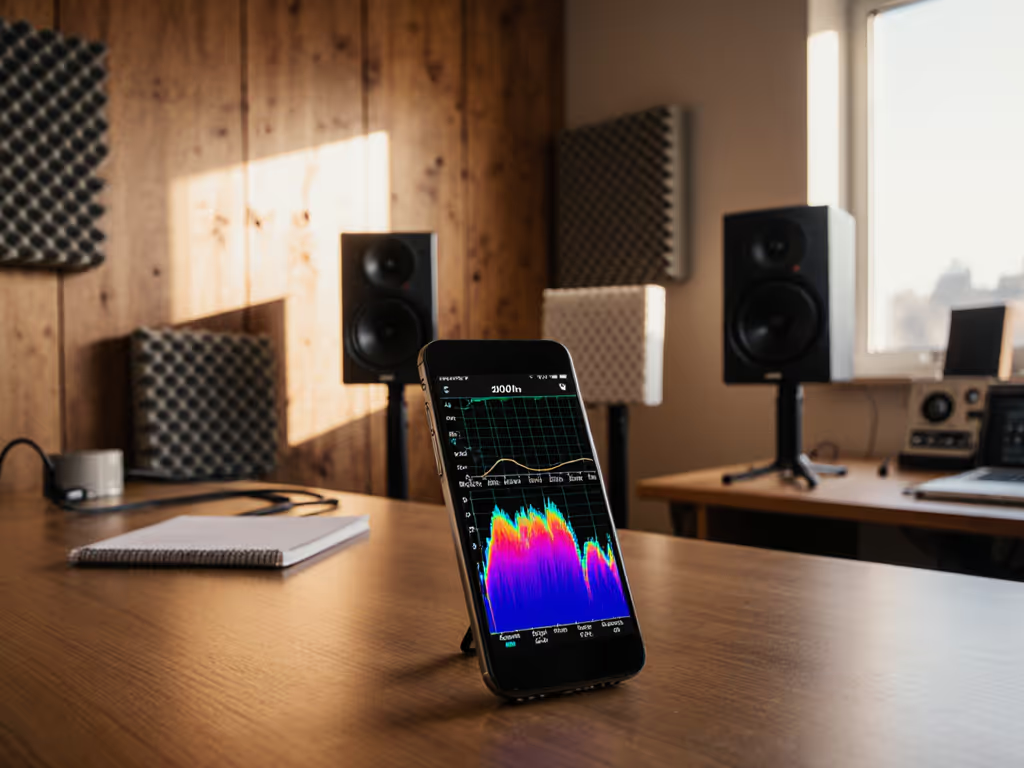
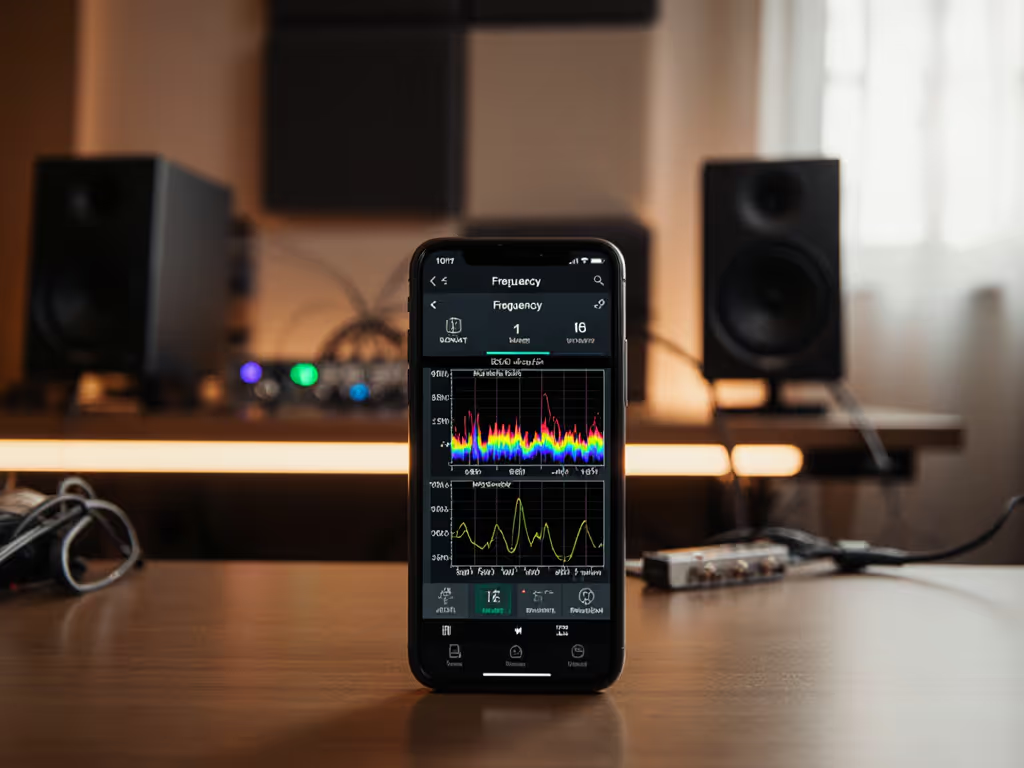
- Subwoofer crossover coherence if integrated Tools like Room EQ Wizard's spectral decay plot reveal whether existing DSP presets mask room issues. For measurement setup and targets, follow our home studio monitor calibration guide.
- Use manufacturer utilities: Generic "firmware updaters" risk bricking. Neumann's Control Panel software validates checksums before flashing, critical when neighbors demand quiet operation. Never update via USB bus power; unstable current corrupts DSP memory in 80% of failed updates I've diagnosed.
- Reset presets post-update: Most DSP monitors revert to linear phase mode. Re-apply your room-specific tilt (e.g., -1.5 dB @ 3 kHz for desk reflections) before critical listening.
Monitor firmware improvement benefits only manifest when updates target your room's acoustic signature, not arbitrary "enhancements."

When Not to Update
Why update studio monitor software becomes irrelevant if:
- Your room's primary issue is untreated 60-120 Hz modes (firmware won't fix boundary gain) Tackle those with our room treatment essentials before touching firmware.
- The update lacks SI unit-backed claims ("better bass" ≠ +3 dB @ 45 Hz with -10 dB distortion)
- You use analog crossovers or non-DSP monitors (e.g., KRK Rokit 5 G4)
I declined a "performance boost" patch for a client's Genelec 8030C when specs showed only on-axis tweaks, their real problem was vertical dispersion causing 3 kHz desk reflections. We fixed it with 2" absorber under the monitors, not firmware. Updates excel at refining what the speaker can control; they don't overcome physics.
The Trust Equation
DSP monitor software updates earn their place in your chain only when they tighten the gap between free-field curves and room-loaded behavior. In my 10x12 ft mix room, updating my Neumanns to firmware v2.7 reduced 120 Hz port resonance by 4.1 dB SPL at 80 cm listening distance, enough to trust 808 tuning at 73 dB SPL without ear fatigue. That's the threshold: when firmware shifts your monitor from "sounding exciting" to revealing what the room does to the signal.
For bedroom producers, this means fewer car-check revisions. For podcasters, it's dialogue clarity surviving WhatsApp compression. And for everyone: mixes that skip the "does this translate?" panic. Prioritize updates that demonstrably smooth power response within your speaker's directivity umbrella, then validate with measurements, not marketing.
Curves matter, but only as far as rooms allow. Context plus curves turns firmware from a gamble into your most reliable revision preventative.
Related Articles