AMT Tweeter Monitors: Tame Harsh Highs Vs Ribbon Tech
By Jae Min Park • 15th Dec
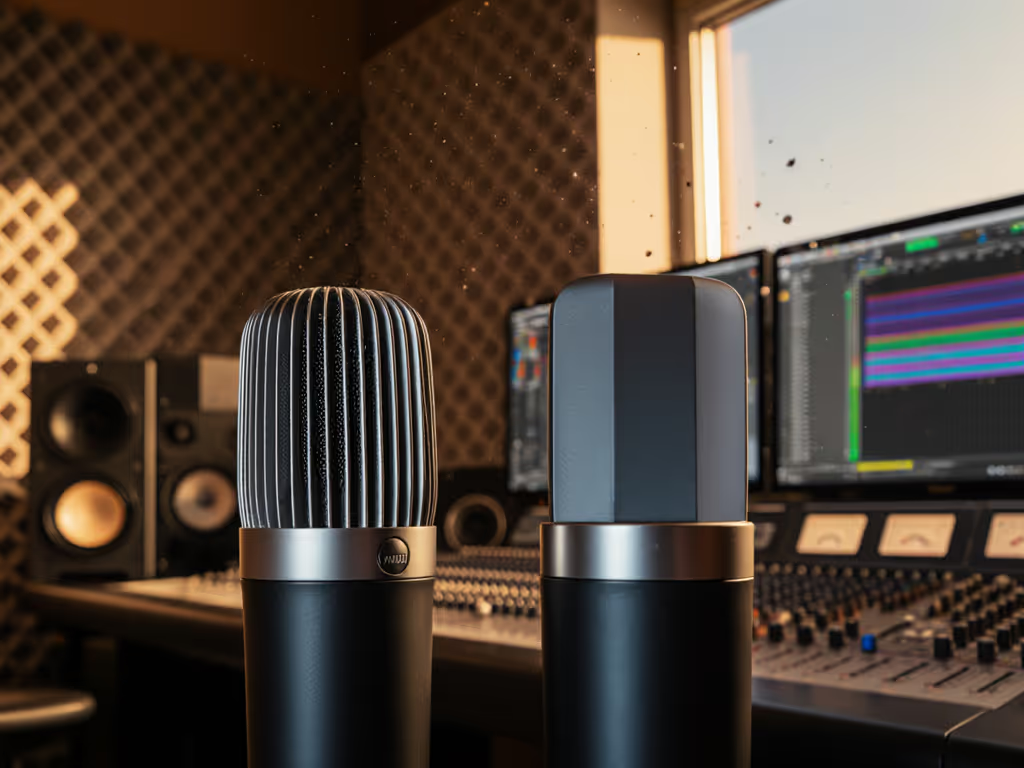
If you've ever finished a mix that sounds brilliant in your room only to hear harsh, brittle highs on earbuds or car speakers, you're not alone. Many bedroom producers struggle with AMT tweeter monitors and ribbon tweeter technology choices that promise clarity but deliver fatigue. The truth? Your tweeter type impacts translation more than most realize. Fortunately, you don't need expensive gear swaps to solve this, you need smarter implementation. Start with our placement and room treatment essentials to address the biggest contributors to harsh highs before touching your gear. Let's demystify these technologies with practical insights for your cramped space.
What Makes AMT and Ribbon Tweeters Special?
Traditional dome tweeters move air like a piston, pushing and pulling in a straight line. But AMT tweeter monitors use a folded diaphragm (think of an accordion's bellows) that compresses and expands with the audio signal. As Dr. Oskar Heil discovered in the 1960s, this design moves air four times faster than the diaphragm itself travels. The result? Cleaner high-frequency detail with less distortion, especially at low volumes where most of us monitor.
Ribbon tweeters share similarities (they're ultra-lightweight conductive films suspended in a magnetic field), but differ in execution. While both are "folded" technologies, AMTs use a pleated membrane that "squeezes" air, whereas ribbons vibrate flatly like a loose guitar string. This gives AMTs a slight edge in transient response measurement for delicate sounds like fingerpicked acoustics or vocal breaths.
Why It Matters for Bedroom Studios
In small rooms, harsh highs often stem from:
- Overcompensation for dull-sounding reference devices
- Room reflections exaggerating certain frequencies
- Poor speaker placement magnifying tweeter directivity
AMT tweeters excel here because they naturally smooth out the "ice-pick" highs that plague dome tweeters. That high-frequency detail remains present but less fatiguing, a game-changer when you're editing dialogue at 2 AM or carving space for vocals in a dense pop mix. One producer I coached switched to modest AMT-based monitors and immediately stopped "de-essing ghosts" (removing sibilance that only existed in her room).
Ribbon tweeters? They offer similar benefits but often require more careful placement due to their wider dispersion pattern. If your desk is against a wall or you're working in a closet-sized space, AMTs might be the more forgiving choice. To reduce desk slap and early reflections, follow our monitor height guide for quick, low-cost placement fixes.
The Translation Trinity: Volume, Placement, and Patience
No tweeter technology magically fixes room issues. But paired with smart setup, AMT and ribbon tweeters reduce your risk of revision loops. Here's how to leverage them:
🔹 Volume Control Check
Both technologies shine at low SPL (sound pressure levels), but here's what beginners miss: AMT tweeter monitors maintain clarity even at 65-70 dB, a lifesaver for apartment dwellers—learn the safe listening levels that protect your hearing and improve translation. Test this:
- Play a track with crisp cymbals at comfortable volume
- Gradually lower until bass feels thin
- The last volume where you still hear cymbal shimmer? That's your sweet spot
"Set it right once; spend your energy finishing songs." This isn't just advice, it's how you build monitoring confidence.
🔹 Placement That Prevents Fatigue
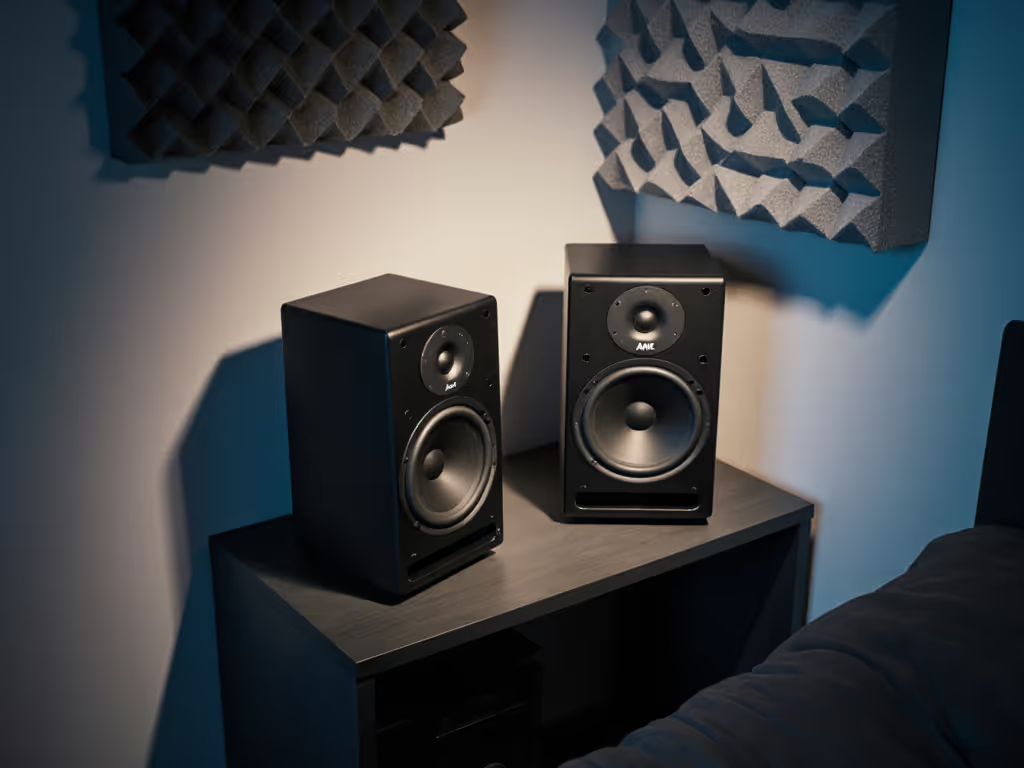
Your tweeter height and angle dramatically impact how highs hit your ears. Follow this checklist:
- Height: Tweeters at ear level (not monitor tops)
- Distance: Minimum 1.5x tweeter width from walls (e.g., 12" for 8" monitors)
- Toe-in: Aim tweeters just past your ears (not directly at them)
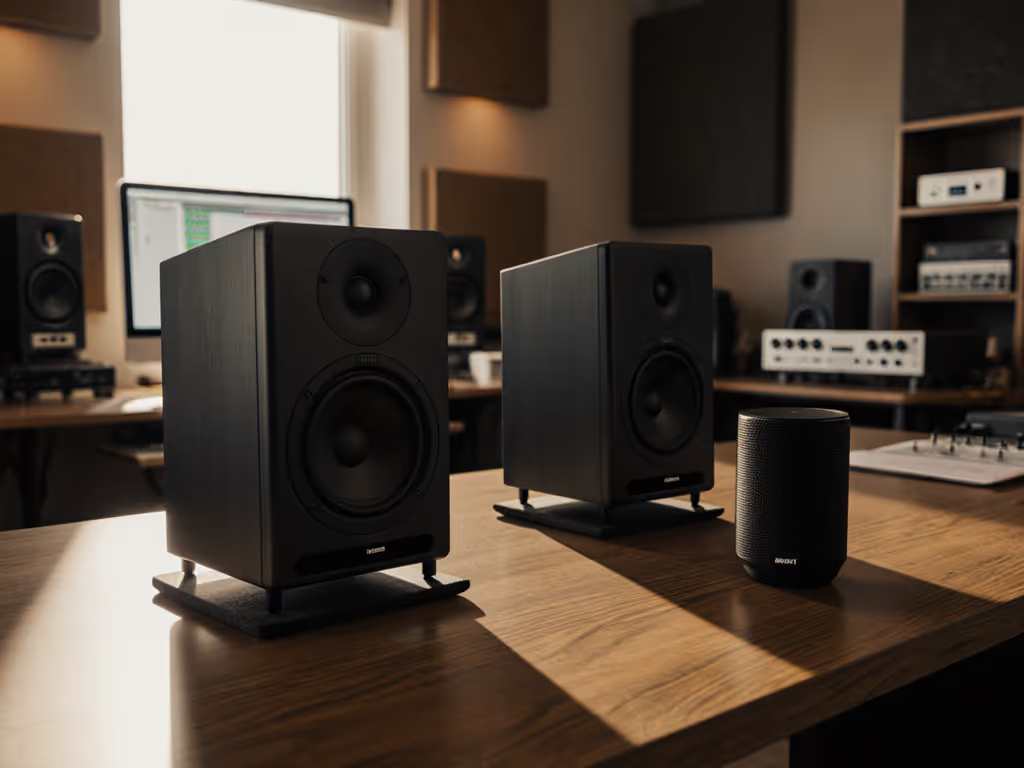
- Isolation: Lift monitors off desks with closed-cell foam or tennis balls
That last tip? It came from my TA days watching students wrestle with car-check failures. Two tennis balls under each speaker, plus moving desks away from walls, solved 80% of their translation issues. Suddenly, mixes held up everywhere. No gear upgrades needed.
🔹 The 3-Day Trust Test
Don't judge monitors by initial "wow" factor. Instead:
- Day 1: Play familiar tracks at safe volume
- Day 2: Mix a simple element (vocal, snare)
- Day 3: Check translation on earbuds/car
If highs sound consistent across devices without "rescue EQ," you've found a keeper. This tweeter impact on mixing is subtle but profound, your ears stay fresh, decisions become reliable, and you stop chasing phantom problems.
Why Spec Sheets Lie to Bedroom Producers
Manufacturers tout "extended frequency response to 40kHz" or "near-zero distortion," but these numbers rarely reflect real rooms. A tweeter's true value is how it helps you make decisions that translate. Here's what matters more than specs: If off-axis consistency is a priority, see our off-axis response comparison with real data on dispersion and sweet spot width.
- Off-axis response: How highs sound when you move slightly (critical for small sweet spots)
- Low-volume performance: Whether cymbal decay remains audible at 68 dB
- Harmonic distortion profile: If it adds "air" (pleasant) vs. "grit" (fatiguing)
AMT tweeters typically outperform dome tweeters here because their folded design moves air more efficiently. Think of it like breathing through a straw versus a wide tube, more controlled airflow means cleaner output. But remember: no tweeter compensates for speakers pushed into corners or desks covered in reflective gear.
Trust the Routine, Not the Hype
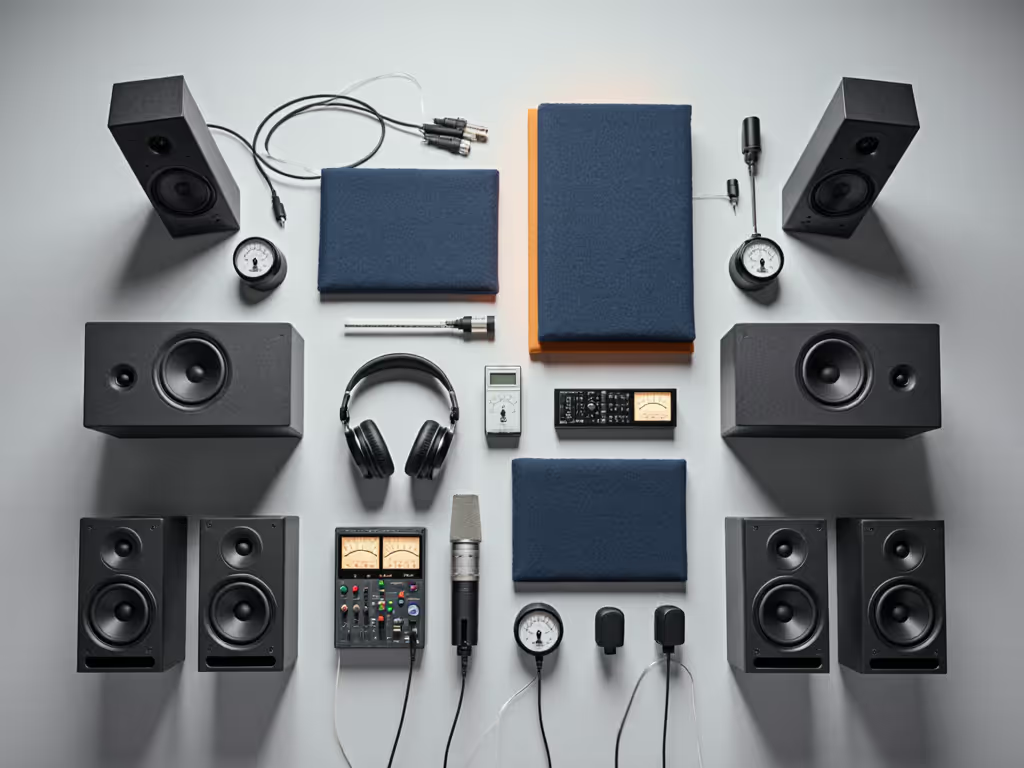
Last week, a student showed me screenshots of "perfect" frequency measurements on his new ribbon-tweeter monitors. Yet his mixes still crumbled on phone speakers. Why? He'd ignored desk reflections and monitored too loudly. Once we bumped his speakers onto tennis balls and set a hard 72 dB limit, his translation improved overnight. When you're ready to go deeper, follow our monitor calibration guide for step-by-step tuning with free tools.
This is the core truth: Confidence comes from a stable monitoring routine, not chasing specs or hype. Whether you choose AMT tweeter monitors or ribbon tweeter technology, consistency beats perfection. Your goal isn't theoretically ideal sound, it's reliable sound that helps you ship finished work.
Next Steps for Confident Monitoring
You don't need to replace gear to fix harsh highs. Start here:
- Reposition: Follow the placement checklist above
- Revolume: Commit to 65-75 dB for 90% of work
- Reset: Use the 3-day trust test before doubting your monitors
When high-frequency decisions finally feel consistent across earbuds, car, and laptop speakers, you'll know you've built something valuable: a monitoring routine you can trust. And that's when your real work begins.
Trust the routine. Less guesswork, more finished songs.
Related Articles