Studio Monitor Critical Listening: Train Your Ears
By Lila Okafor • 17th Jan
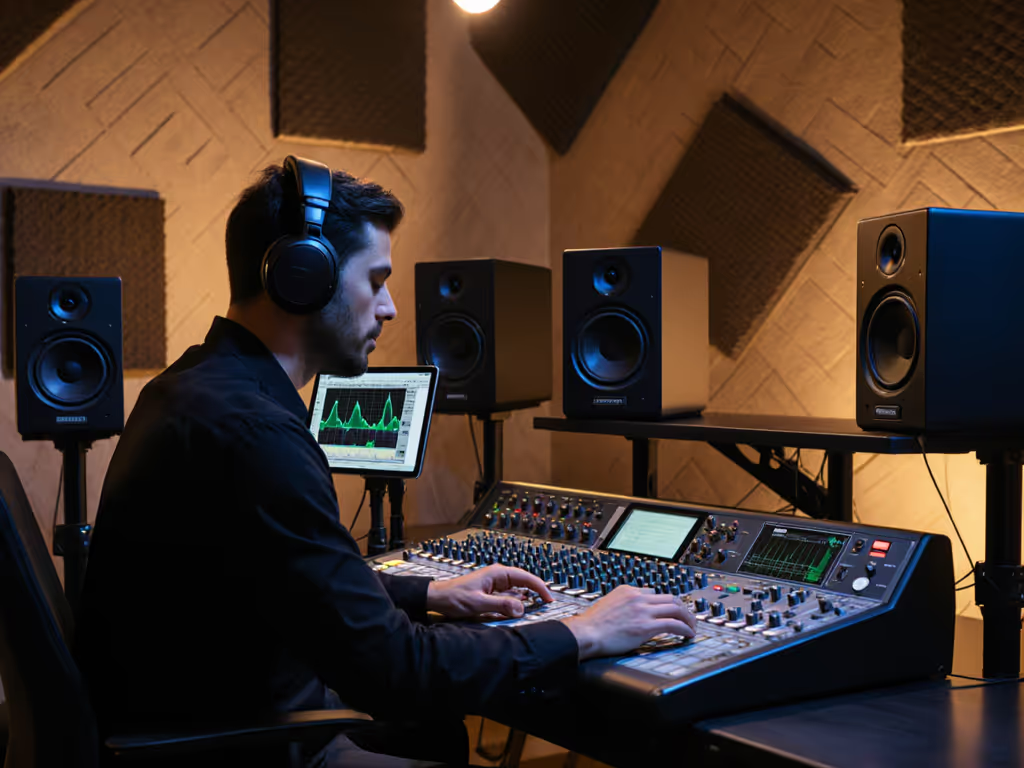
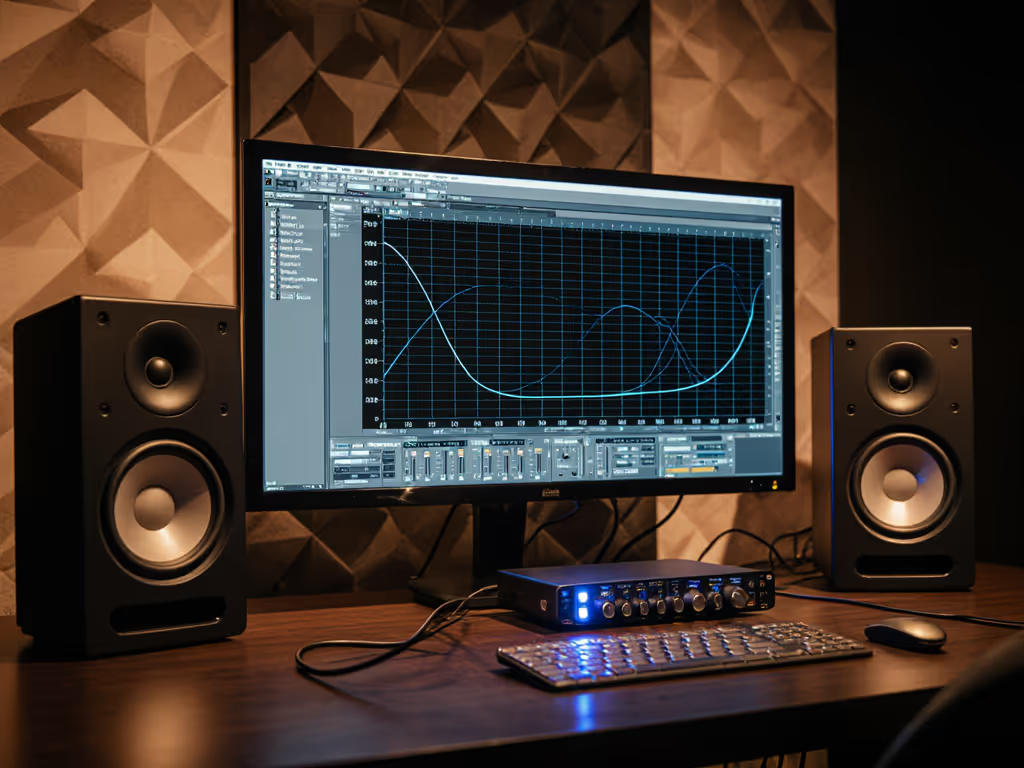
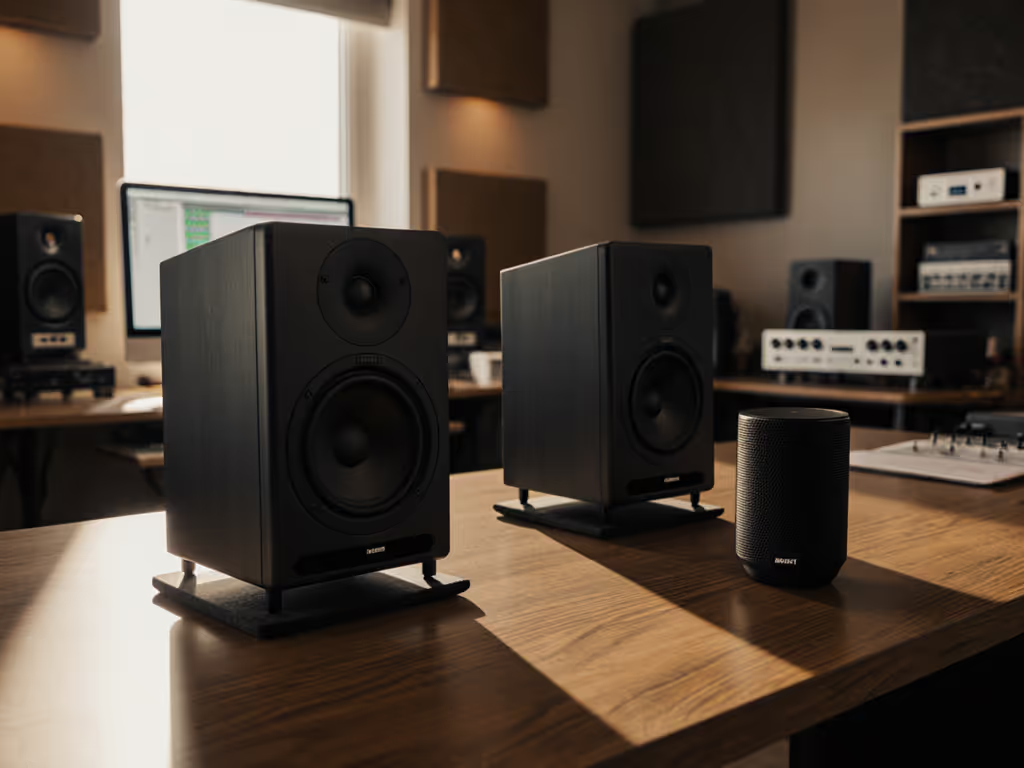
For producers in compact rooms, studio monitor critical listening isn't about chasing audiophile euphoria. It's about diagnosing translation failures before your client does. Critical listening training for your nearfield setup (0.7 to 1.2 m) must account for how your room distorts reality. That 200 Hz desk reflection isn't a monitor flaw; it's your low-end lie detector. Learn practical fixes for this with our monitor height guide. When curves collide with concrete walls, only context-aware listening builds trust. Let's cut through the noise.
Why Standard Critical Listening Advice Fails in Small Rooms
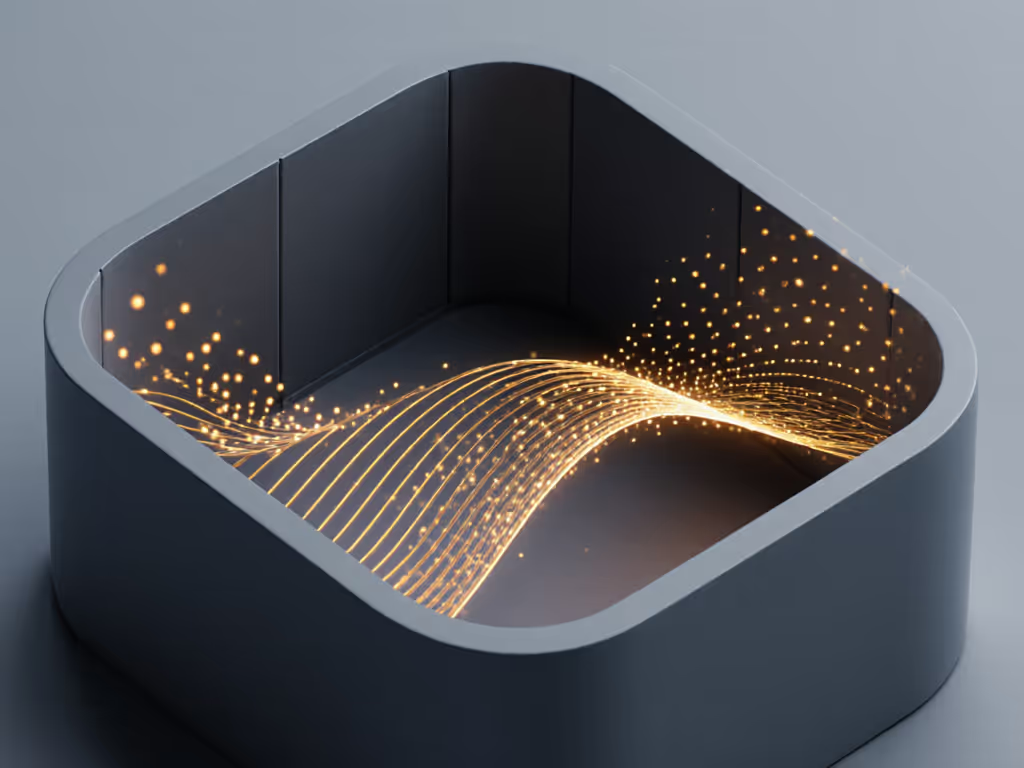
Most guides preach "ideal" quiet-room practices irrelevant to bedroom studios. Problem: Your desk reflects 200 to 500 Hz energy, collapsing imaging and bloating bass. Your walls create nulls at 85 Hz where kick drums vanish. At 75 dB SPL (to avoid noise complaints), many monitors lose articulation below 100 Hz. Protect your ears and your mix decisions with our safe listening levels guide. As I learned when a client insisted their "sparkly" mix was perfect (until we isolated their desk-induced 200 Hz hump), you're not hearing the track. You're hearing the room's response.
Curves matter, but only as far as rooms allow.
True critical listening here demands three shifts:
- Listen at your desk height (not ear level), where boundary interference lives
- Focus on low-SPL stability (70 to 75 dB), do harmonics stay clear as volume drops?
- Track power response, not just on-axis curves. If 30° off-axis measurements spike at 3 kHz, your room will glare at conversation frequencies.
Training Your Ears for Translation, Not Perfection
Target Real-World Fail Points (Not Hi-Fi Ideals)
Forget "natural reverb decay" or "soundstage depth." Your mixes implode on earbuds because:
- Bass below 100 Hz gets normalized away by Spotify
- Sibilance at 6 to 8 kHz becomes painful on cheap earbuds
- Mid congestion (250 to 500 Hz) muddies phone speaker playback
Actionable drill: Load a reference track known to translate well (e.g., Billie Eilish - Bad Guy) into your DAW. Solo the bass channel. At 75 dB SPL:
- Can you hear all sub layers below 60 Hz? If not, your monitor lacks low-SPL clarity.
- Does the kick thump or just thud? If thudding, your room's 80 to 100 Hz mode is overwhelming.
- When you mute the bass, does vocal clarity improve immediately? If yes, your power response has midrange bloat.
This is ear training for producers, not passive listening. It quantifies what matters: "Does this change survive YouTube compression?"
Calibrate Against Your Reality
Monitor calibration techniques start with acoustics, not software. For a structured walkthrough with free and paid tools, follow our home studio monitor calibration guide. Before touching DSP:
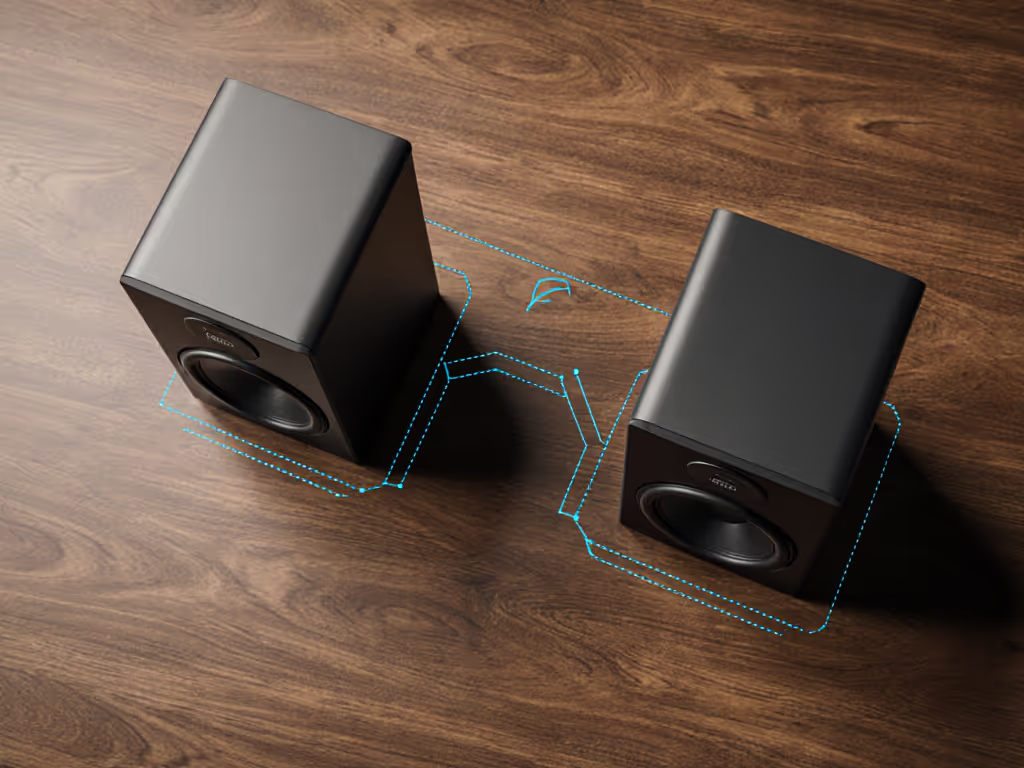
- Measure your desk reflection: Place a tape measure from tweeter to desk surface. If ≤ 30 cm, expect a cancellation dip near 570 Hz (calculated: 343 m/s ÷ [2 × desk_distance]). Verify by playing a 570 Hz sine wave. If it vanishes, you've found your desk's smear zone.
- Test toe-in tolerance: Rotate speakers inward 5°. Does imaging tighten or collapse? If it collapses instantly, your off-axis response is unstable (a common flaw in coaxial designs).
- Check vertical consistency: Lower your chair 10 cm. Does the vocal balance shift dramatically? If yes, the tweeter's vertical dispersion is narrow, fatal for small desks.
Build Your Critical Listening Toolkit (No Fancy Gear Needed)
Audio reference tracks should expose your room's weaknesses, not generic "good sound." Curate tracks like:
- EDM reference: Flume - Never Be Like You (tests sub-bass stability at low SPL)
- Vocal reference: Adele - Easy On Me (reveals 2 to 5 kHz harshness from desk reflections)
- Busy mix reference: Childish Gambino - Feels Like Summer (highlights mid congestion at 300–600 Hz)
Developing listening skills requires structure:
| Technique | How to Apply in Small Rooms | Critical Threshold |
|---|---|---|
| A/B Testing | Toggle between your mix and reference at the same low volume | If differences vanish below 80 dB SPL, your monitors lack LF articulation |
| Frequency Hunt | Use a narrow EQ sweep (Q=4) to find problem zones in your room | 120 Hz null? Boost +3 dB and see if bass returns, confirms room mode |
| Volume Consistency | Listen at 70 dB then 85 dB. Does vocal clarity drop >3 dB at lower volume? | If yes, monitor's off-axis response is unstable |
Cutting Through the Hype: What Actually Matters for Translation
I've tested monitors in 20+ compact rooms (<150 sq ft). One pattern dominates: predictable off-axis wins over flat on-axis. Why? Your room reflects everything your monitor radiates sideways and up. Get the basics right with our room treatment and placement essentials. A 6 dB dip at 4 kHz off-axis (common in waveguide designs) becomes a 9 dB peak in your room's reverb tail, wrecking dialogue intelligibility. Meanwhile, monitors with smooth power response (e.g., controlled directivity down to 500 Hz) make room modes predictable, not catastrophic.
Critical listening training isn't about hearing "more." It's about hearing consistently across SPLs and positions. When clients send revisions saying "the bass is weak on iPhone," it's rarely your mix, it's your room's bass mode masking the true low end. That's why I cut desk height and added a 40 Hz low-latency shelf (0.5 ms latency) for a hip-hop producer last month. The sub hit harder at 72 dB, and earbud translation improved instantly.
Your Next Steps: Trust Your Ears, Not Just Specs
Skip the endless A/B reviews. For developing listening skills that prevent revision loops:
- Journal translation failures: Note where mixes collapse ("iPhone earbuds: vocals lost"), not "bad sound."
- Test DSP presets at low SPL: Many Sonarworks targets over-brighten for small rooms. Try a -1 dB shelf at 3 kHz to counter desk reflections.
- Validate with one subwoofer preset: If 80 Hz crossover + 0 ms latency cleans up kick drums without rattling windows, you've nailed it.
Latency under 2 ms is non-negotiable for real-time critical listening, anything higher disconnects your brain from the audio. But above all: trust monitors that behave consistently at your desk height. If they work at 75 dB in a messy room, they'll translate everywhere.
Controlled directivity isn't a spec sheet buzzword. It's the difference between guessing bass levels and knowing they'll hit on SoundCloud. Start listening where your elbows rest, not where review sites pretend studios exist. Your next mix will need fewer revisions. And that's the only metric that pays bills.
Related Articles