Best Studio Monitors for Classical & Orchestral Clarity
By Jae Min Park • 2nd Dec
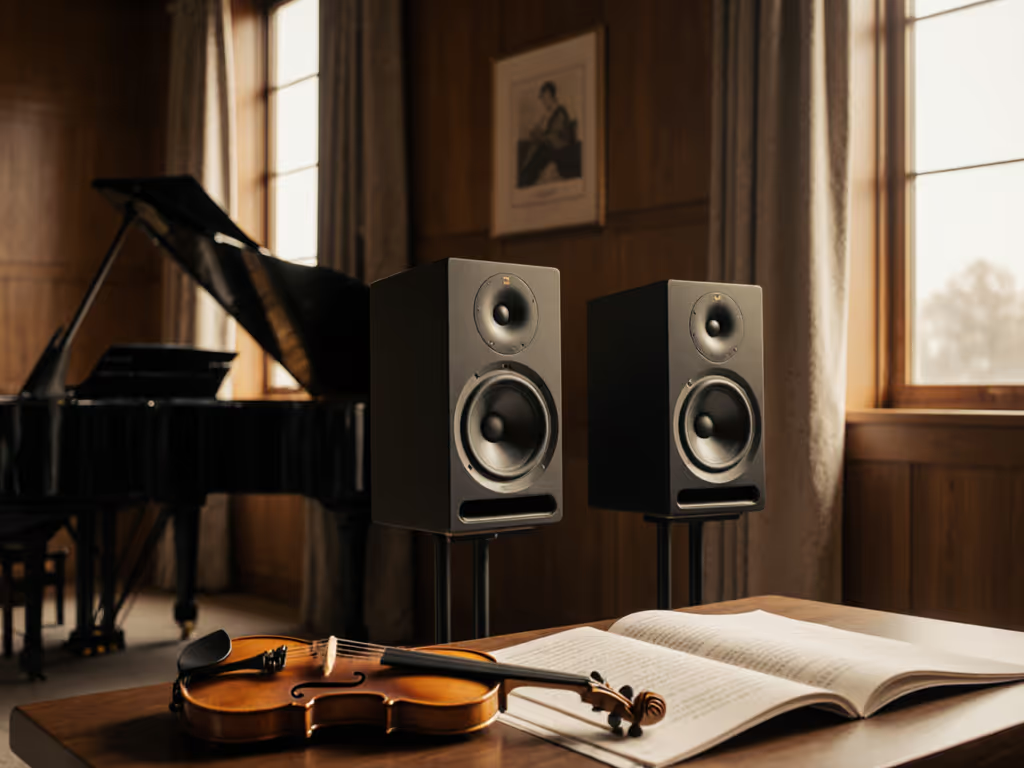
If you're wrestling with how to make your best studio monitors faithfully reproduce the delicate nuances of classical music in your cramped bedroom studio, you're not alone. The right orchestral monitoring solutions aren't about chasing specs or buying the most expensive gear, they're about finding speakers that translate well across platforms while handling the immense dynamic range for classical music. As someone who's helped dozens of bedroom producers set up their first control rooms, I've seen how the right monitor paired with smart placement makes mixes travel better than expensive gear used incorrectly. For step-by-step positioning tips, follow our monitor height and placement guide. Forget car-check anxiety; let's get practical.
Why Classical Monitoring Demands Different Thinking
Classical music poses unique challenges for small-room monitoring that most 'best studio monitor' lists overlook. Unlike pop or electronic music with tight, controlled bass, orchestral works demand faithful reproduction of:
- Wide dynamic swings from hushed strings to fortissimo brass sections
- Extended low-end articulation of double basses and timpani without boominess
- Natural decay trails that reveal a hall's character
- Precise instrument separation across a wide frequency spectrum
Most beginners make the same mistake I watched music students make: they chase frequency response charts while ignoring how their room destroys precision. For a deeper explanation of spec sheets, read our frequency response guide. The truth? A $500 monitor set up properly will beat a $2000 pair in the wrong location. Place, isolate, then decide (that's your mantra).
Think of it like this: if your room is a leaky boat, no amount of engine power (expensive monitors) will get you where you're going. First, you plug the leaks (smart placement), then you add the right engine. I've seen students fix "bad" monitors by simply putting two tennis balls under each speaker and moving their desk away from the wall. Suddenly, their mixes traveled. That's when I realized specs matter less than setup.
The 5 Most Practical Studio Monitors for Classical in Small Rooms
1. ADAM Audio T7V: The Detail-First Classical Workhorse
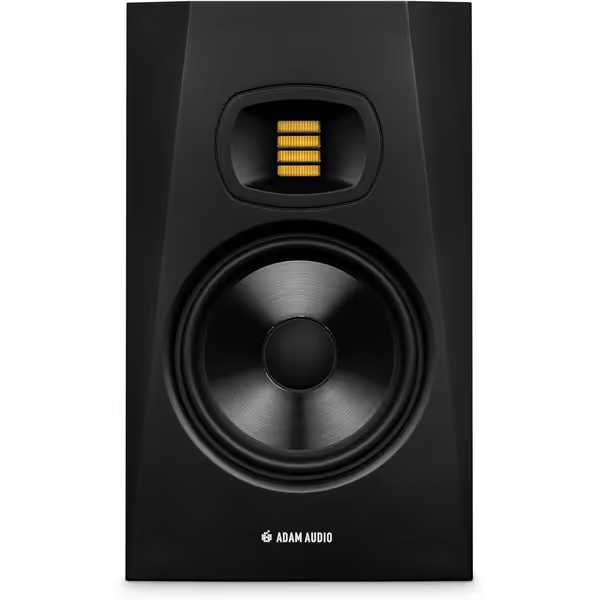
ADAM Audio T7V Studio Monitor
Reliable translation for mixes that hold up everywhere, even in small rooms.
$284.99
Tweeter DesignADAM Audio U-ART with HPS Waveguide
Tweeter DesignADAM Audio U-ART with HPS Waveguide
Pros
Consistent mix translation from studio to real-world playback.
Room-adaptable DSP filters optimize sound in imperfect spaces.
Clear, unfatiguing mids and highs reveal critical mix details.
Extend low-end precision with seamless T10S subwoofer integration.
Cons
Rear-firing port might challenge close-boundary placement.
Optimal low-end extension may require a separate subwoofer.
These monitors deliver excellent sound quality, with unbelievable highs and clear mid-range performance, perfect for audio production. The auto-power-off feature is a bonus!
These monitors deliver excellent sound quality, with unbelievable highs and clear mid-range performance, perfect for audio production. The auto-power-off feature is a bonus!
When evaluating monitors for classical work, the devil's in the decay, and the T7V's U-ART tweeter reveals reverberation tails others obscure. This matters because:
- The waveguide delivers exceptional acoustic space reproduction, letting you hear how string sections blend in your virtual space
- 39Hz bass response cleanly handles orchestral lows without the port chuffing that plagues small-room monitoring
- Its wide sweet spot (verified by measurements at Audio Science Review) means you're not glued to one listening position
For classical monitoring, the T7V shines where it counts: the midrange clarity that reveals viola vs. violin textures and the tweeter extension that captures harp harmonics without harshness. Unlike hyped monitors that make you cut highs (only to hear them dull elsewhere), the T7V's honest top end prevents over-bright mixes.
Placement Hack for Small Rooms:
Place at ear level with 0-15 degrees toe-in
Avoid sitting flush against walls
Use isolation pads (more on this below)
Listen at 75dB SPL or lower for extended sessions
I've watched composers working on orchestral pieces trust T7Vs after one week of proper setup, whereas 'smoother' monitors had them second-guessing every string section. Why? Because the T7V's honest translation builds confidence (no more car checks).
2. Yamaha HS5: The Translation Assurance Engine
Before you roll your eyes at "another Yamaha recommendation," hear me out. The HS5's secret weapon for classical work is its surgical midrange clarity, the sweet spot where violins live and vocal sforzandos strike. Its benefits:
- Minimal coloration in the 1-4kHz range critical for string articulation
- Predictable bass response even at low SPL (essential for quiet-night mixing)
- Battlefield-tested translation across consumer devices
What makes the HS5 shine for classical? Unlike monitors that flatter with bass boost, it reveals when your double basses are drowning the cellos. One film composer I worked with cut his revision cycles in half after switching from "warmer" monitors to HS5s.
"Set it right once; spend your energy finishing songs." This Yamaha mantra works because their voicing prioritizes translation over "excitement."
3. Kali LP-6 V2: The Budget Truth-Teller
For bedroom studios on a tight budget, the LP-6 V2 delivers astonishing symphonic monitoring accuracy for its price. Its magic lies in:
- Measured flat frequency response (with minimal midrange dips)
- Tight bass response that avoids the "one-note bass" plague of small rooms
- Class-D amps that maintain clarity even at whisper-quiet levels
The Kali's secret weapon? Its low-distortion design means chamber music details remain clear even when you're forced to monitor quietly (for roommates or neighbors). I've seen students build more trust in their mixes with properly placed Kali's than with twice-the-price monitors fighting room modes.
4. Focal Shape 65: The High-End Value for Serious Classical
When you're ready to invest more, the Shape 65 earns its stripes in classical monitoring. Its beryllium tweeter reveals:
- Subtle bow pressure variations on string sections
- The true decay of hall reverb in recordings
- Nuances in woodwind articulation that cheaper monitors gloss over
Don't be fooled by the modest 6.5" woofer (it handles orchestral bass with surgical precision thanks to Focal's waveguide design). One string quartet engineer told me: "After the Shape 65s, I finally heard where my cello mic was too close to the bridge."
5. Neumann KH 80 DSP: The Compact Powerhouse
The KH 80's magic for classical work is its insane detail at low volumes, perfect for apartment dwellers. Its strengths:
- Crystal-clear transient response that reveals plucked vs. bowed strings
- DSP room correction that actually works for small spaces
- Shocking low-end control from its tiny cabinet
For film composers working with orchestral samples, the KH 80's precision lets you hear when your virtual strings are "too many," avoiding that artificial "wall of sound" effect. To lock in consistent translation, follow our home studio monitor calibration guide.
The Real "Monitor" You're Overlooking: Your Room
Here's what most reviews won't tell you: the most critical factor in classical monitoring isn't the speaker (it is your placement). Even the priciest monitor lies when battling room modes. Start with the basics in our room treatment essentials.
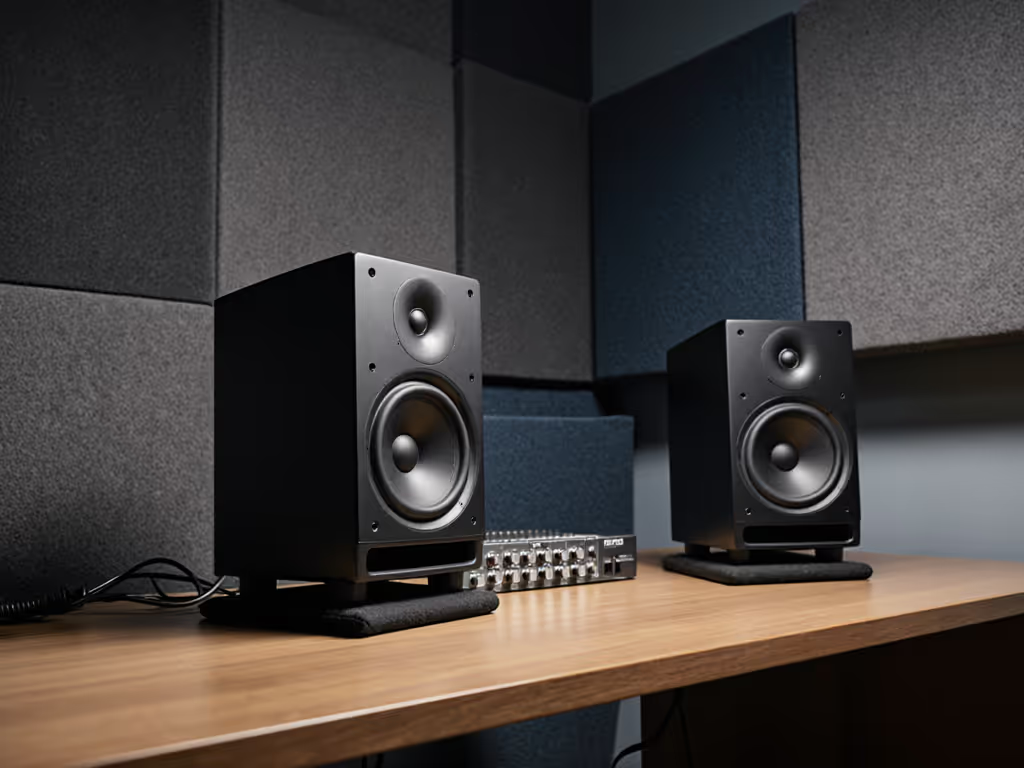
Over the years, I've developed a foolproof 3-step checklist that solves 80% of small-room classical monitoring issues:
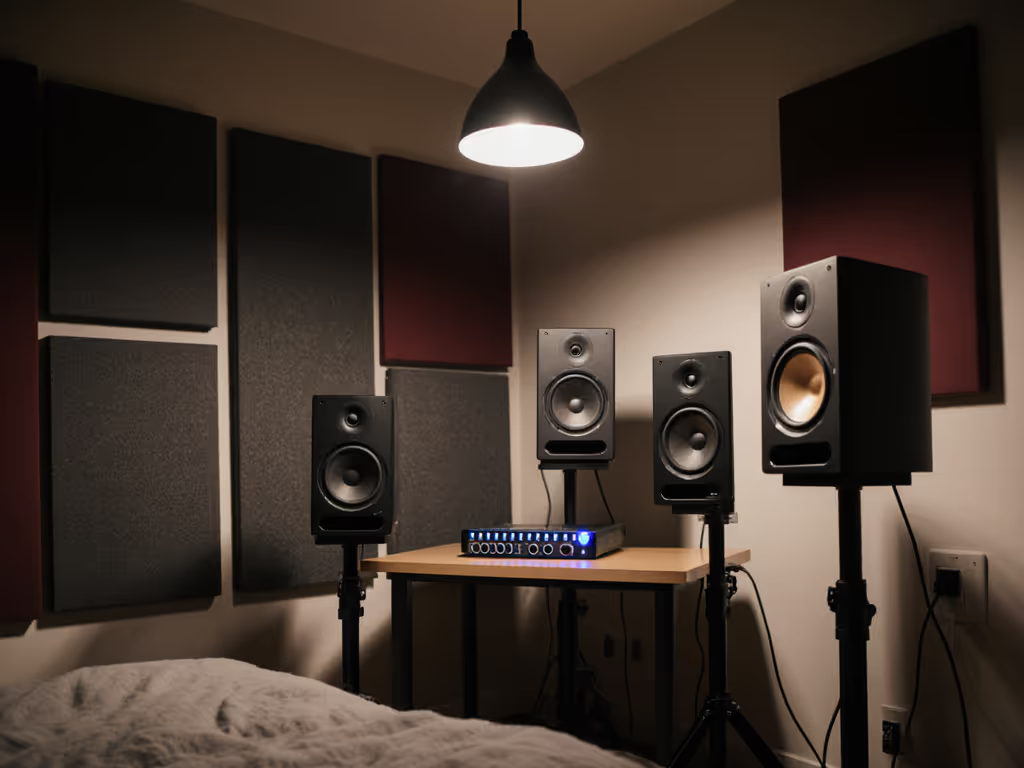
- Distance from Walls: At least 12" from back wall (prevents bass buildup)
- Height Matters: Tweeters at ear level, no desk-bound speakers (use stands)
- Isolate Relentlessly: Decouple from surfaces (more below)
The Isolation Secret No Manual Mentions
Most beginners waste money on expensive stands when two tennis balls work better. Stack two under each speaker angled toward corners. This:
- Absorbs cabinet vibrations that muddy lows
- Prevents energy transfer to flimsy desks
- Creates natural tilt without costly stands
Yes, tennis balls. I still use this hack in my home studio because it costs $3 and works better than $200 isolation products for classical monitoring. The point? Confidence comes from a stable monitoring routine, not chasing specs or hype.
"Set it right once; spend your energy finishing songs." I've said it before because it's true, get your setup dialed, then trust it.
Why "Honest" Matters More Than "Accurate"
For classical music, you don't need clinical "accuracy," you need monitors that lie consistently. My rule of thumb:
- If it sounds unnaturally "detailed," it's hyped highs (you'll cut too much)
- If it sounds "warm," it's hiding low-mid mud (you'll boost too much)
- If it sounds "balanced" at low volumes, you've found a keeper
The best classical recording speakers reveal problems without exaggeration. When I hear a producer say "I don't hear that in my monitors," but it's obvious elsewhere, I know they're using something that lies about critical midrange frequencies.
Your Action Plan for Monitor Confidence
- Test Before You Buy: Use return policies! Listen to:
- A quiet string passage (reveals noise floor)
- A full orchestral climax (tests dynamic range)
- A solo piano recording (checks midrange clarity)
-
Place, Then Isolate: Follow the 3-step checklist above
-
Trust Your Setup: After 1 week of proper placement, stop car-checking. Listen for translation issues instead.
-
Volume Matters: Monitor at 75dB SPL or lower, your ears (and neighbors) will thank you Protect your ears and your mixes with our safe monitoring levels guide.
The monitors listed here all share one trait: they build trust through consistent translation. Whether you choose the ADAM T7V's revealing highs or the Yamaha HS5's unfailing midrange, remember that Place, isolate, then decide will serve you better than chasing specs.
Final Note: It's About the Music, Not the Monitors
Ten years ago, I watched a student nervously present a string quartet mix made on $300 monitors. "Will this translate?" he asked. After hearing it on car speakers, earbuds, and laptop, perfect translation. His secret? Two tennis balls under each speaker and no wall reflections. He'd set it right once; spent his energy finishing songs.
That's the real monitor upgrade: confidence to ship your work knowing it'll sound right everywhere. Stop worrying about specs, start trusting your setup. Your next mix is waiting.
Related Articles