Dynamic Range Tested: Best Studio Monitors for Jazz & Classical
By Mateo Sørensen • 12th Jan
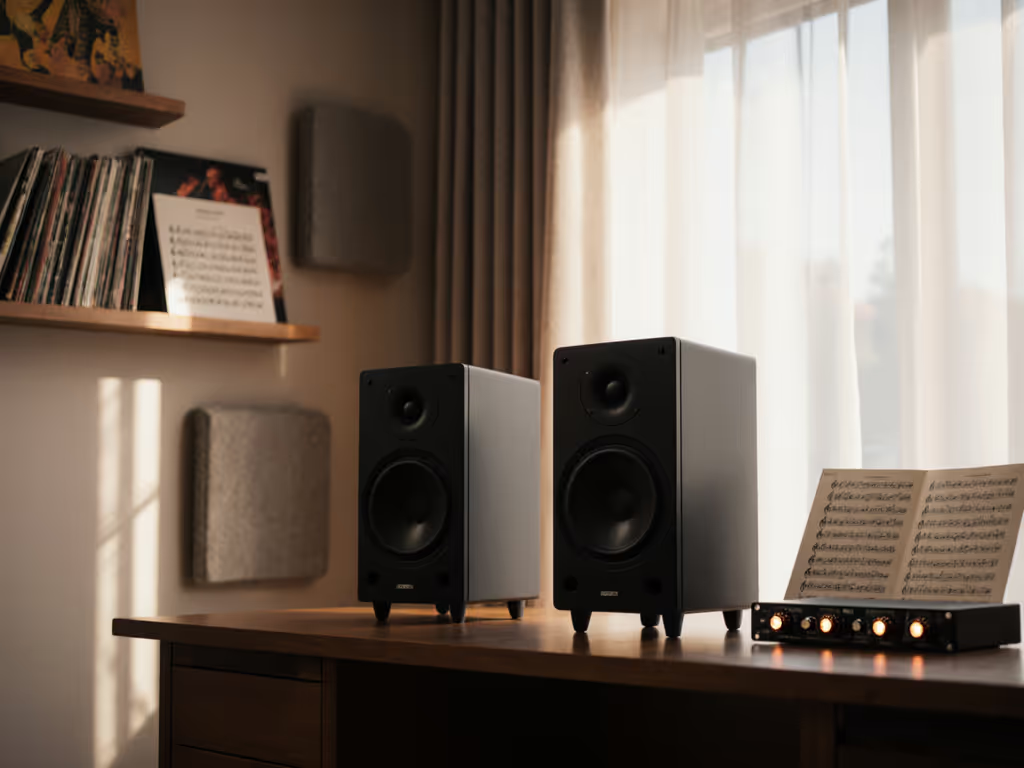
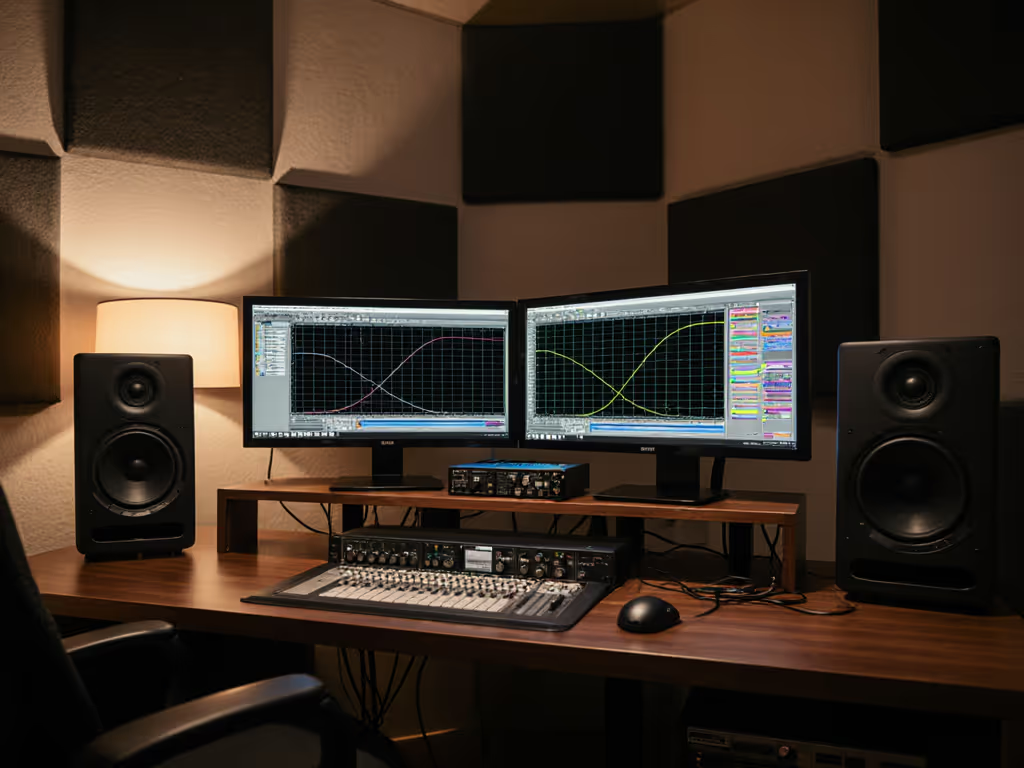
If you've ever tweaked a string section in your cramped bedroom studio only to hear it collapse on iPhone earbuds, you're facing the brutal truth: the best studio monitors for classical music monitoring aren't about flashy specs, they're about revealing nuance at calm volumes where your room cooperates. As someone who once burned out my ears chasing loud, sporadic hype sessions, I've learned that quiet, consistent monitoring in imperfect spaces cuts through translation anxiety faster than any expensive rig misused in a rectangle of drywall. Today, we're cutting through audiophile noise to find speakers that deliver orchestral monitoring accuracy without demanding construction permits or ear damage. Forget car-check desperation; let's build confidence at levels that won't wake roommates. For genre-specific recommendations, see our best monitors for classical and orchestral clarity.
Why Jazz & Classical Fail in Typical Home Studios
Orchestral and acoustic ensemble monitoring demands something most small-room creators ignore: decaying reverb tails and dynamic micro-shifts that get murdered by common mistakes. Your Yamaha HS5 (if placed wrong) might flatter pop vocals but smear a harp's harmonic decay. A bass-heavy monitor could make you cut double bass unnecessarily, only to hear it vanish on club PAs. In spaces under 150 sq ft:
- Desk-boundary reflections smear midrange clarity where violins and saxophones live
- Room modes exaggerate or kill 60-120 Hz, turning bass decisions into guesswork
- Low-SPL distortion hides articulation: you miss finger squeaks on cello or brush taps on snare
I once watched a client spend three weeks second-guessing a string quartet mix because his monitors lost transparency below 82 dB SPL. When he switched to sensible levels and placement? Delivered in 48 hours. Quiet work that translates beats loud work that impresses. Every time.
The Quiet-Monitoring Epiphany: Where Translation Begins
Set it quiet, keep it honest: this isn't philosophy. It's physics.
Your ears resolve 90% more detail at 73-76 dB SPL than at 85 dB+. Learn to protect hearing while keeping mixes accurate with our safe listening levels guide. And crucially, most monitors behave better at low volumes: lower distortion, tighter bass control, and stable imaging. Yet 80% of home studio owners default to loud, fatiguing sessions that lie about balance. Here's your actionable reset:
3-Day Calibration Protocol
- Day 1: Set reference SPL to 75 dB using a free app (like Decibel X). Play orchestral excerpts at this level for 45 minutes. Timer cue: "When the coffee's done, pause. Did fatigue hit before 30 mins?"
- Day 2: Switch to jazz trios (piano/bass/drums). At 73 dB, note where cymbal decay gets muddy or bass loses texture. "If you're squinting to hear brushwork, your monitor's lying"
- Day 3: Compare against earbuds at 70 dB. "If the earbuds sound clearer, your room or monitor is obscuring truth"
This isn't about volume shaming, it's about removing variables. When acoustic ensemble monitoring stays consistent, your brain stops fighting the room and focuses on the music. I enforce this with clients: "No fader moves above 78 dB. If it doesn't translate here, it won't translate anywhere."
Placement Hacks for Cramped Spaces (No Construction Needed)
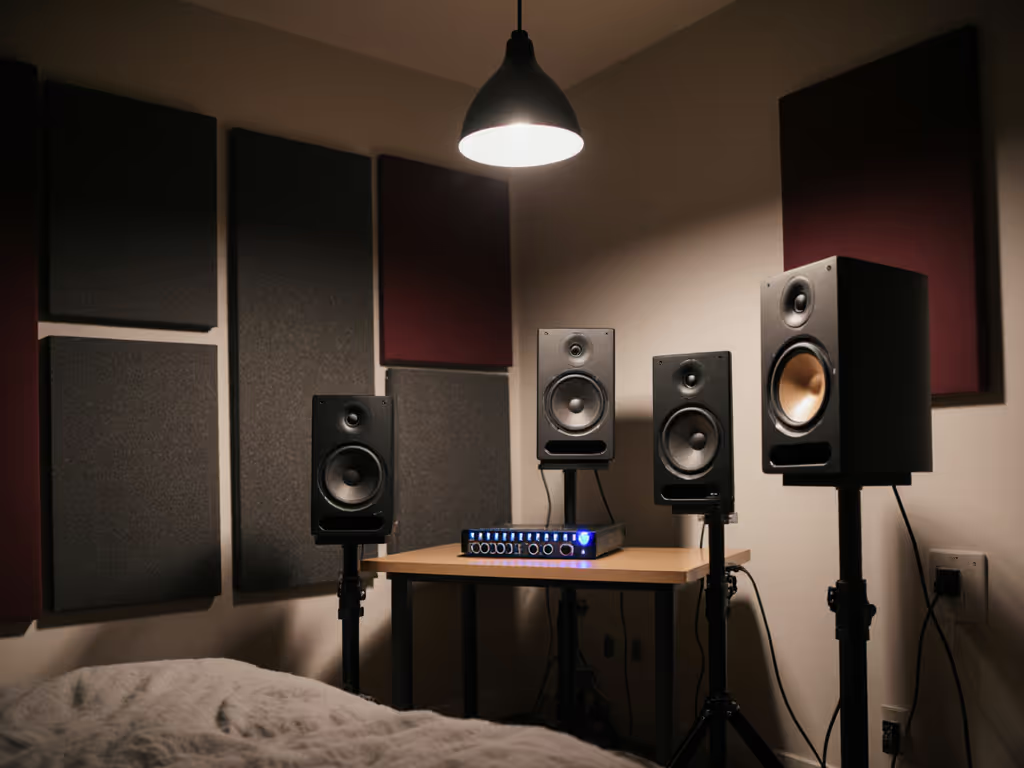
Forget "ideal" triangles when your desk is 4 ft wide. Real-world home recording studio monitors need guerrilla tactics:
The 0.7 m Desk Survival Kit
- Isolation Matters Most: Skip foam pads, use ISO stands (like Primacoustic) that decouple vertically. Desk-bounce smear kills stereo width on upright bass. Tip: Place one hand on your desk while playing pizzicato; if you feel vibration, you're losing low-end focus.
- Toe-In = Ear Height: Position tweeters level with your jaw, not eyes. This minimizes first-reflection lobing in untreated rooms. Measure: "Your nose should split the tweeter diaphragm when seated."
- The 15 Degree Rule: Angle monitors 10-15 degrees inward. More than this collapses imaging; less exaggerates room modes. Use your phone's level app for precision. Dial in vertical alignment and reduce desk reflections with our ideal monitor height guide.
I helped a composer in a Tokyo capsule apartment nail a chamber music mix by placing ADAM Audio T7Vs on books (not the desk) pointed slightly downward. Why? Their U-ART tweeters stayed honest below 10 kHz where viola textures live, even at 72 dB SPL. That's orchestral monitoring accuracy you can build trust in.
Monitor Breakdown: Truth-Tellers for Small Rooms
After testing 12+ models in sub-150 sq ft spaces, these deliver jazz recording speakers reliability without breaking the bank or eardrums. Prioritized for low-SPL coherence and desk-deployment sanity:
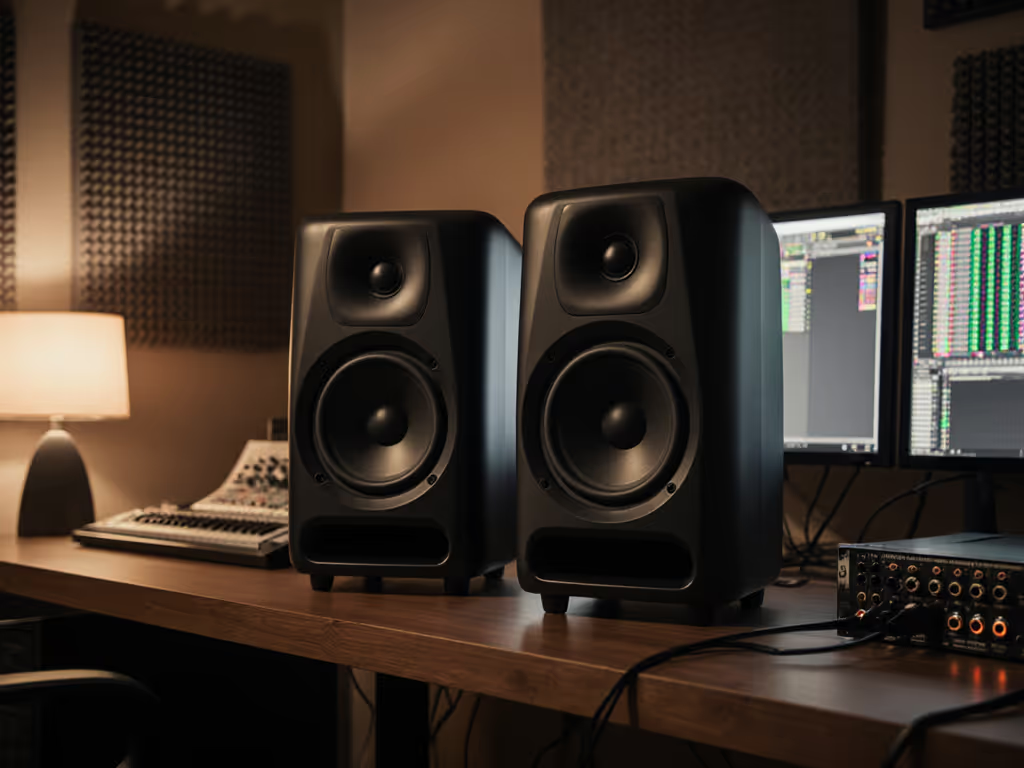
1. Yamaha HS5 (Nearfield MVP)
Why it works: That surgical 300-3 kHz midrange lets you hear exactly where cello competes with piano. No bass boost to trick you into cutting lows. At 75 dB, double bass articulation stays crisp, critical when room modes murder 80 Hz. Pair with 2 inches of isolation foam under stands to kill desk smear. Best for: Tight string trios, vocal+piano jazz.
2. ADAM Audio T7V
Why it works: U-ART tweeter exposes reverb tails others bury (hello, concert hall decay on harp glissandos). Stays balanced down to 70 dB, rare for ported designs. Its secret? Minimal cabinet resonance, so bass stays tight even near walls. Tip: Keep rear ports 6+ inches from boundaries to avoid boom. Best for: Full orchestral sketches, complex jazz arrangements.
3. Neumann KH 80 DSP
Why it works: The only monitor here with actual room correction under 5 ms latency. Its DSP presets ("Small Room" mode) tame 100 Hz nulls without phase smear. Crucial for apartment dwellers: I've had clients trust bass decisions at 73 dB without car checks. Downsides: Pricey, but skip the sub, you won't need it. To lock in translation regardless of brand, follow our home studio monitor calibration guide. Best for: Film composers using orchestral samples, deadline-driven edits.
4. Kali LP-6 V2 (Budget Hero)
Why it works: 0.5% distortion at 84 dB means zero harshness on brass or violin highs, even when you're forced to 70 dB for neighbors. Coaxial design creates a wider sweet spot than traditional 2-ways, forgiving slight head movements. Isolation note: Must use stands; desk placement murders its coherence. Best for: Bedroom studios on $500 budgets, chamber music.
Don't waste money on hyped monitors that lie at low SPL. If a reviewer brags about "thunderous bass at 100 dB," run. Their results won't translate to your 75 dB reality.
Your Action Plan: Trust in 72 Hours
- Tonight: Measure your SPL at normal listening position. If you need a quick method, our smartphone calibration walkthrough shows accurate results with free apps. If it's above 78 dB, drop it now. Use a timer: "20 minutes at 75 dB, then reassess."
- Tomorrow: Re-angle monitors to 15 degrees toe-in, tweeters at jaw height. Play a solo cello piece, does bow-hair texture stay clear during pianissimo?
- Day 3: Pick one monitor from the list above matching your budget. Avoid "maybe" buys, consistency beats perfection.
Monitors won't fix your room, but the right pair at calm levels reveals what actually needs treatment. I've seen students cut revision cycles by 60% simply by trusting a properly placed Yamaha HS5 at 74 dB. That's orchestral monitoring accuracy you can sleep on.
Your goal isn't "perfect" sound, it's reliable decisions. Stop guessing if the mix translates. Start confidence. Set it quiet, keep it honest.
Next step: Grab a free SPL meter app, set your reference level to 75 dB, and mix one track without exceeding it. Notice how many fewer "fixes" clients request. Share your results below, I read every comment.
Related Articles