Vintage vs Modern Studio Monitors: Translation Truth
By Lila Okafor • 14th Nov
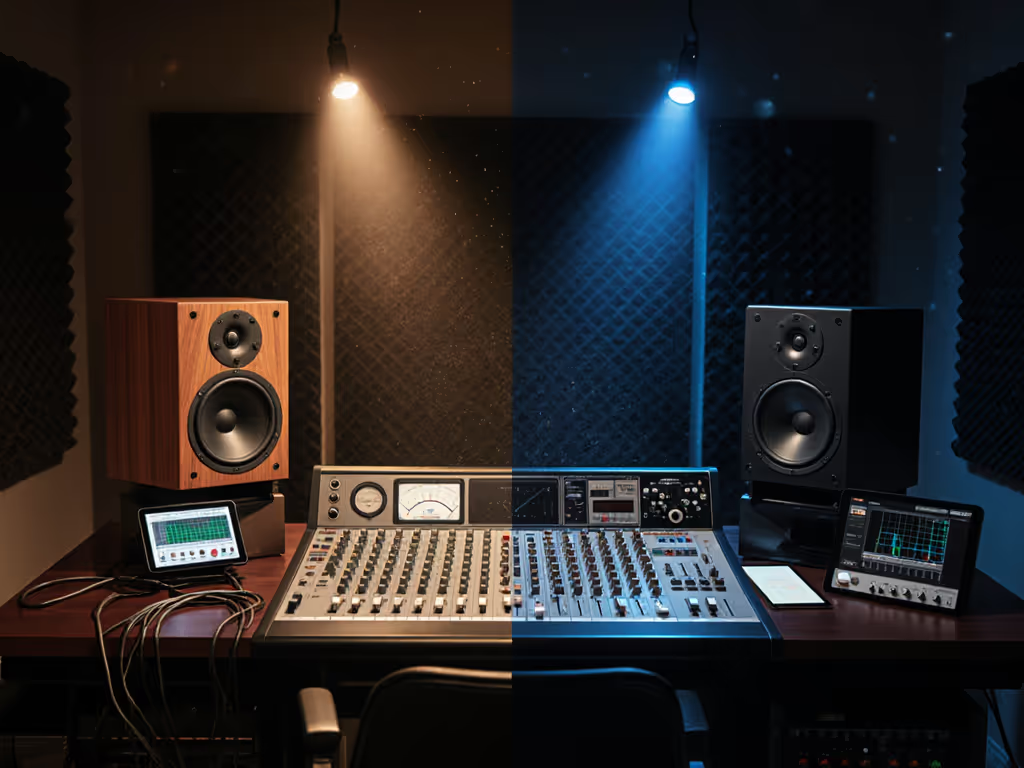
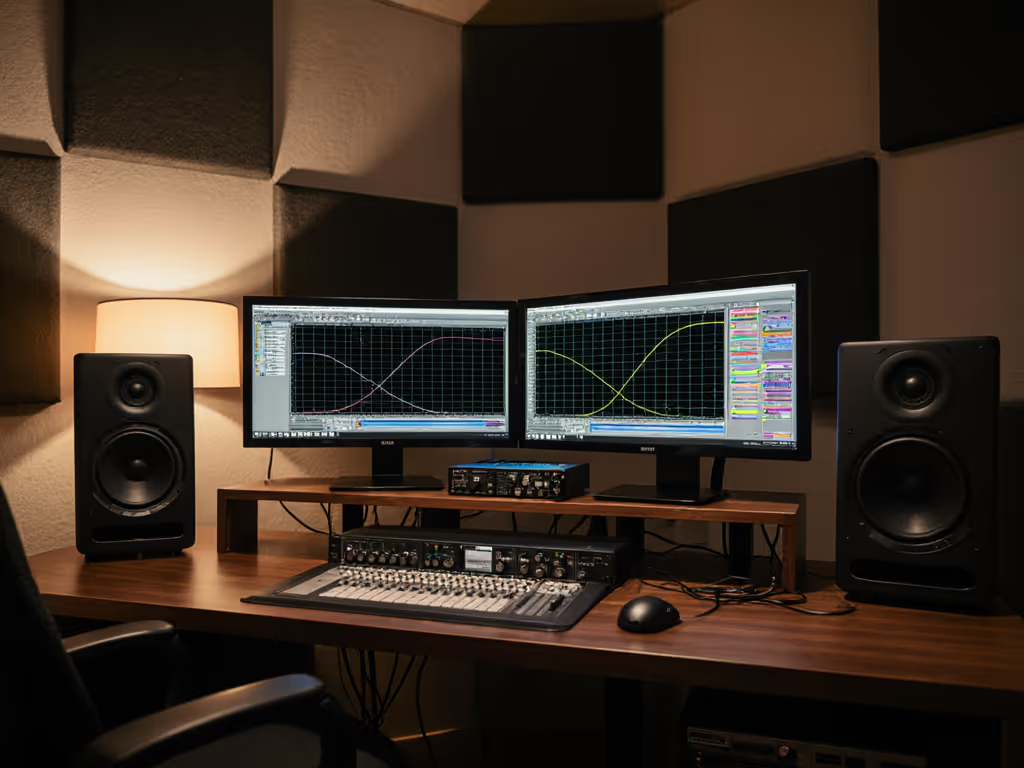
Good studio monitors for small spaces face a unique challenge: delivering translation-worthy accuracy within acoustical constraints that would make any engineer sigh. As I've learned through countless iterations in compact rooms, "curves matter, but only as far as rooms allow." Understanding this fundamental principle is the first step toward navigating the classic vs modern monitors debate that endlessly cycles through producer forums. While vintage designs have their enthusiasts, modern engineering has addressed critical issues that directly impact how your mixes translate across the real-world playback systems your listeners actually use.
The One-Meter Reality Check
Before we compare eras, let's establish what matters in your space: 8x10 to 12x14 feet with reflective surfaces, limited placement options, and nearfield listening distances of 0.7 to 1.2 meters. At this proximity, controlled directivity and smooth power response become non-negotiable (not marketing buzzwords). This is why many "best professional studio speakers" from the analog-era monitoring playbook fail in today's bedroom studios, despite their legendary status.
Consider the Yamaha NS10, a staple of 80s and 90s studios. In its original control room context (with proper boundary management and 3+ meter listening distances), it delivered the brutal honesty mix engineers needed. But in today's typical small room with nearfield placement? Its wide dispersion creates excessive early reflections from your desk and walls, smearing imaging and creating comb filtering that distorts midrange balance by ±6 dB SPL. To mitigate this, follow our ideal studio monitor height guide to reduce desk reflections and keep imaging intact. That's not accuracy, it's acoustic chaos.
I recently helped a client clinging to vintage KEF LS3/5a speakers for monitoring. They loved the "magic" midrange until we measured the room response. Their 200 Hz peak from desk reflections created a bass-heavy illusion that had them consistently undermixing low end. We cut the desk height, added DSP correction, and the mix translation issues vanished. This is the moment I stopped trusting lab curves alone, the one-meter reality check changed everything.
Why Vintage Monitor Value Isn't What You Think
Let's respect the classics: British monitors like Tannoy Dual Concentrics and BBC LS3/5a designs set standards for accuracy in their era. But "vintage monitor value" requires critical context:
- Durability concerns: Foam surrounds and rubber suspensions degrade over time, altering frequency response. If you're unsure whether aging components are skewing your reference, see our studio monitor lifespan guide for telltale signs and tests. That "original" JBL L100 might now measure 3 dB hotter in the bass due to suspension deterioration
- Power handling limitations: Most analog-era monitoring systems can't sustain the 85-90 dB SPL levels needed for proper low-end evaluation without distortion, especially problematic when you must monitor quietly
- Directionality mismatch: Vintage designs often feature wide dispersion patterns that become liabilities in reflective small rooms
- Distortion profiles: Modern measurements reveal harmonic distortion spikes in vintage crossovers that weren't measurable in their era
A critical measurement caveat: many vintage speakers show smooth anechoic responses but suffer from "spectral coloration" (frequency-dependent energy buildup in the time domain). This isn't captured in standard frequency response graphs but creates that "vintage euphonic" sound that ruins translation. At one meter in your room, these resonances become dominant.
Curves matter, but only as far as rooms allow.
Modern Monitor Advantages: Engineering for Small Spaces
Today's best professional studio speakers aren't just "better"; they're specifically engineered for the acoustic realities of modern production spaces. This is where modern monitor advantages directly address your top pain points:
1. Controlled Directivity
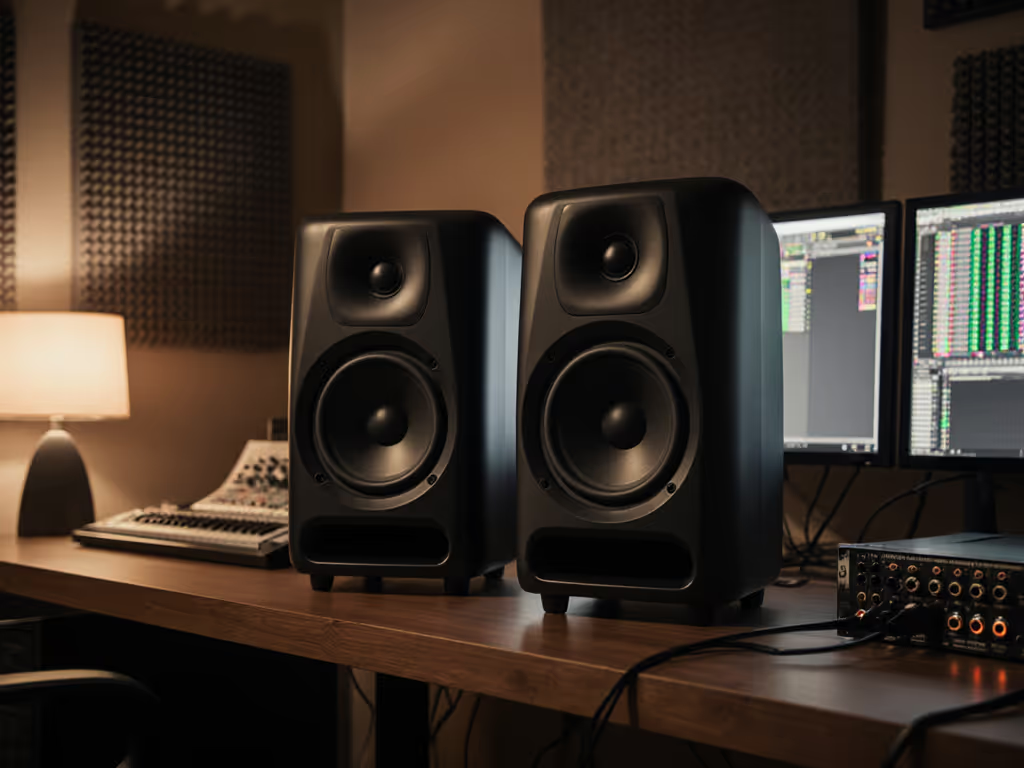
Modern coaxial and waveguide designs (like the Eve Audio SC307) maintain consistent frequency response across wider horizontal and vertical angles. This stability means your desk reflections remain spectrally similar to your direct sound, reducing comb filtering. In contrast, vintage monitors often exhibit "beaming" (narrow dispersion at high frequencies) that creates a tiny sweet spot. When you move your head 6 inches while tracking vocals, your entire balance shifts.
2. Low-SPL Accuracy
Your need to monitor quietly (70–75 dB SPL) exposes a critical vintage limitation: many analog-era designs lose bass articulation below 85 dB SPL due to driver nonlinearities. Modern Class D amplifiers and neodymium magnets maintain linear response down to 65 dB SPL (exactly what you need for late-night work in apartment settings).
3. DSP Integration
Unlike passive vintage designs, modern active monitors incorporate DSP that addresses your space-specific issues:
- Boundary compensation for desk/wall placement
- Low-latency room correction presets
- Protection circuits that maintain accuracy at varying volumes
This isn't "colored" sound; it's translation-preserving adaptation. When your client complains about "muddy bass," it's often because your monitors didn't reveal how your room was masking those frequencies at low volumes.
The Subwoofer Integration Factor
Your small room's bass issues (60-120 Hz modes) affect all monitors, but vintage designs compound the problem. Many analog-era speakers used large ports tuned for bigger rooms, creating port turbulence at low SPL that muddies your kick drum transient response.
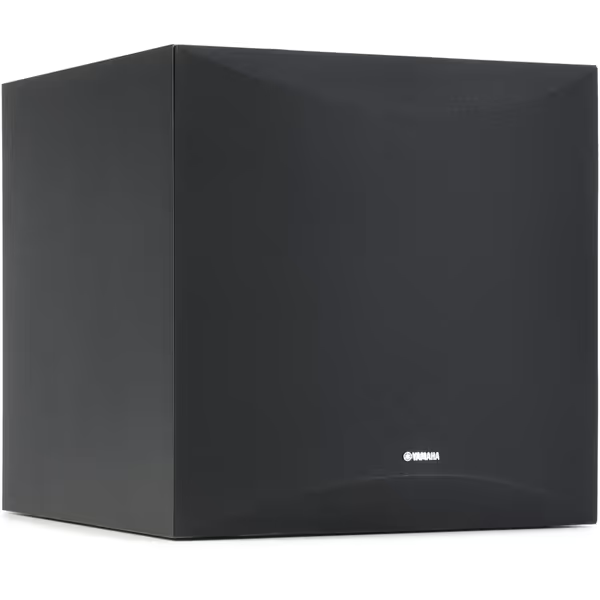
Yamaha NS-SW100BL Subwoofer
Deep, clear bass for home theater acoustics, even in large rooms.
$249.95
Woofer Size10 inches
Woofer Size10 inches
Pros
Clear, tight bass with Twisted Flare Port.
Powerful enough for large room applications.
Easy setup and seamless integration with Yamaha receivers.
Cons
Limited connectivity options.
May be too powerful for smaller, untreated rooms.
Customers find the subwoofer delivers excellent sound quality, with one mentioning it's perfect for home theater systems. Moreover, the subwoofer is powerful enough to fill large rooms, and customers appreciate its ease of setup and functionality with Yamaha receivers. Additionally, they like its noise level, noting it feels like it shakes the whole house, and consider it well worth the price.
Customers find the subwoofer delivers excellent sound quality, with one mentioning it's perfect for home theater systems. Moreover, the subwoofer is powerful enough to fill large rooms, and customers appreciate its ease of setup and functionality with Yamaha receivers. Additionally, they like its noise level, noting it feels like it shakes the whole house, and consider it well worth the price.
Modern solutions like the Yamaha NS-SW100BL subwoofer address this with technologies specifically designed for small spaces:
- Twisted Flare Port reduces port noise at low volumes
- Advanced YST II technology maintains linear response down to 20 Hz
- Compact cabinet fits under desks without dominating your space
The integration process matters more than the sub itself. For step-by-step level matching, phase alignment, and EQ, use our home studio monitor calibration guide. Start with an 80 Hz crossover (adjustable via LPF on the sub), set phase by measuring impulse response with a test tone, and use the low-end shelf in your DAW for final tuning (not the sub's volume knob). This preserves your monitor's native character while extending low-end translation.
Practical Evaluation: Your One-Meter Test Protocol
Forget showrooms and YouTube reviews. Here's how to truth-test vintage vs modern monitors in your actual space:
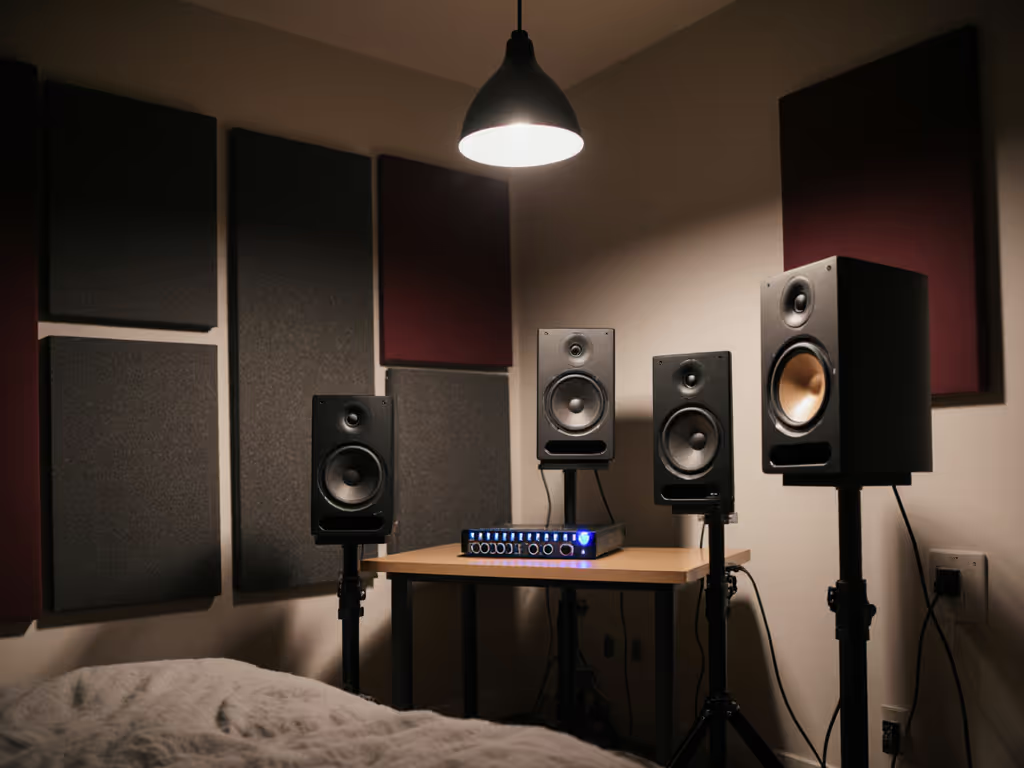
- Placement consistency: Set both options at 1 meter, same height, same distance from walls
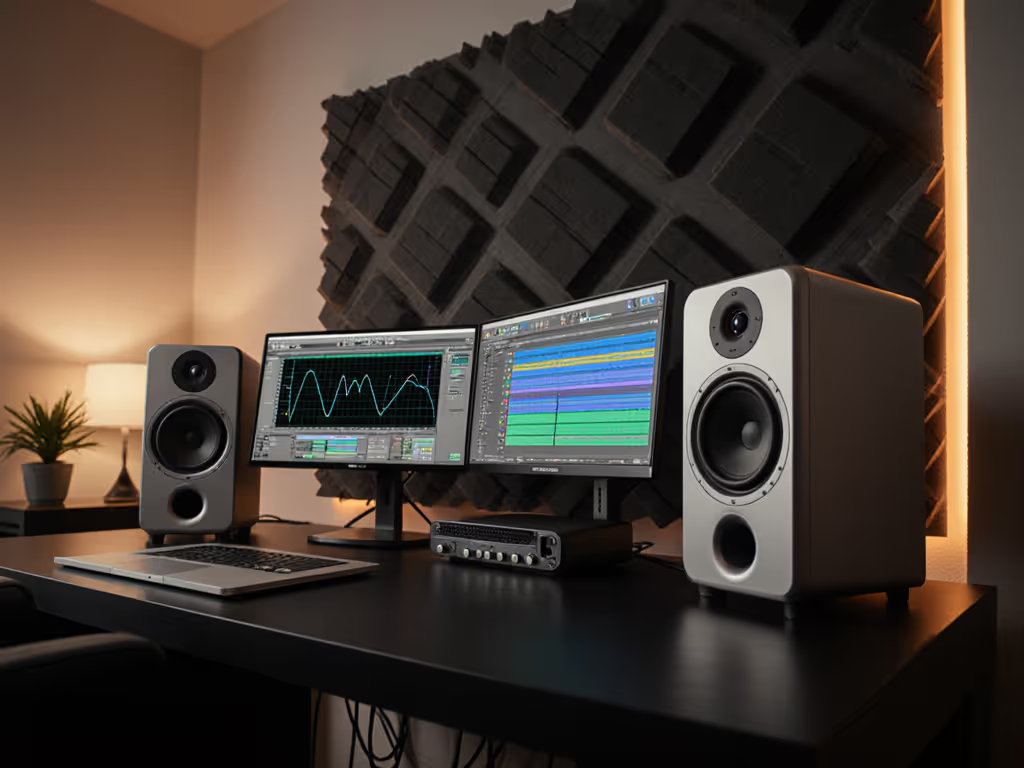
- Measurement baseline: Use a calibrated mic at ear position; measure 1/12th-octave sweeps from 30 Hz to 20 kHz
- Critical listening tests:
- Play a reference mix known to translate well
- Focus on vocal clarity at low volumes (70 dB SPL)
- Check kick drum transient definition
- Listen for fatigue after 20 minutes
- Translation validation: Compare against known consumer devices (AirPods, laptop speakers)
Pay special attention to vertical off-axis response measurements between 30-60 degrees above and below the tweeter axis. Many vintage monitors show 10+ dB variations here, while modern designs stay within 3 dB.
The Translation Verdict
After testing more than 50 monitor pairs in compact rooms, my evidence-based conclusion is clear: modern monitors deliver superior translation in today's typical production spaces. This isn't about "new vs old"; it's about physics meeting practical constraints.
Classic vs modern monitors ultimately comes down to one question: Do you need a speaker that sounds "vintage" in isolation, or one that helps you make decisions that hold up everywhere your audience listens? For the vast majority of bedroom producers, podcasters, and indie engineers, the answer points firmly toward modern designs engineered for real-world acoustics.
The engineers who made those vintage monitors would likely upgrade too; they understood the core principle we often forget: your room is the final filter in your monitoring chain. Controlled directivity isn't a luxury; it's the foundation of predictable translation.
Curves matter, but only as far as rooms allow.
Your Next Steps
Don't just take my word for it. Perform your own one-meter reality check:
- Borrow a modern pair (like the Eve Audio SC307 or Neumann KH 80) for direct comparison
- Measure your room response with both options
- Focus on midrange clarity at your typical working volume
- Test translation with consumer devices immediately after adjusting
Remember that perfect monitoring doesn't exist, but modern engineering has narrowed the gap between your room and reliable translation. Stop chasing vintage mojo that works against your space's limitations, and start making decisions you can trust from the first pass.
Your mixes deserve monitors that work with your room, not against it. The next time you're tempted by "vintage monitor value," ask: will this actually help me ship mixes faster with fewer revisions? The answer might surprise you.
Related Articles